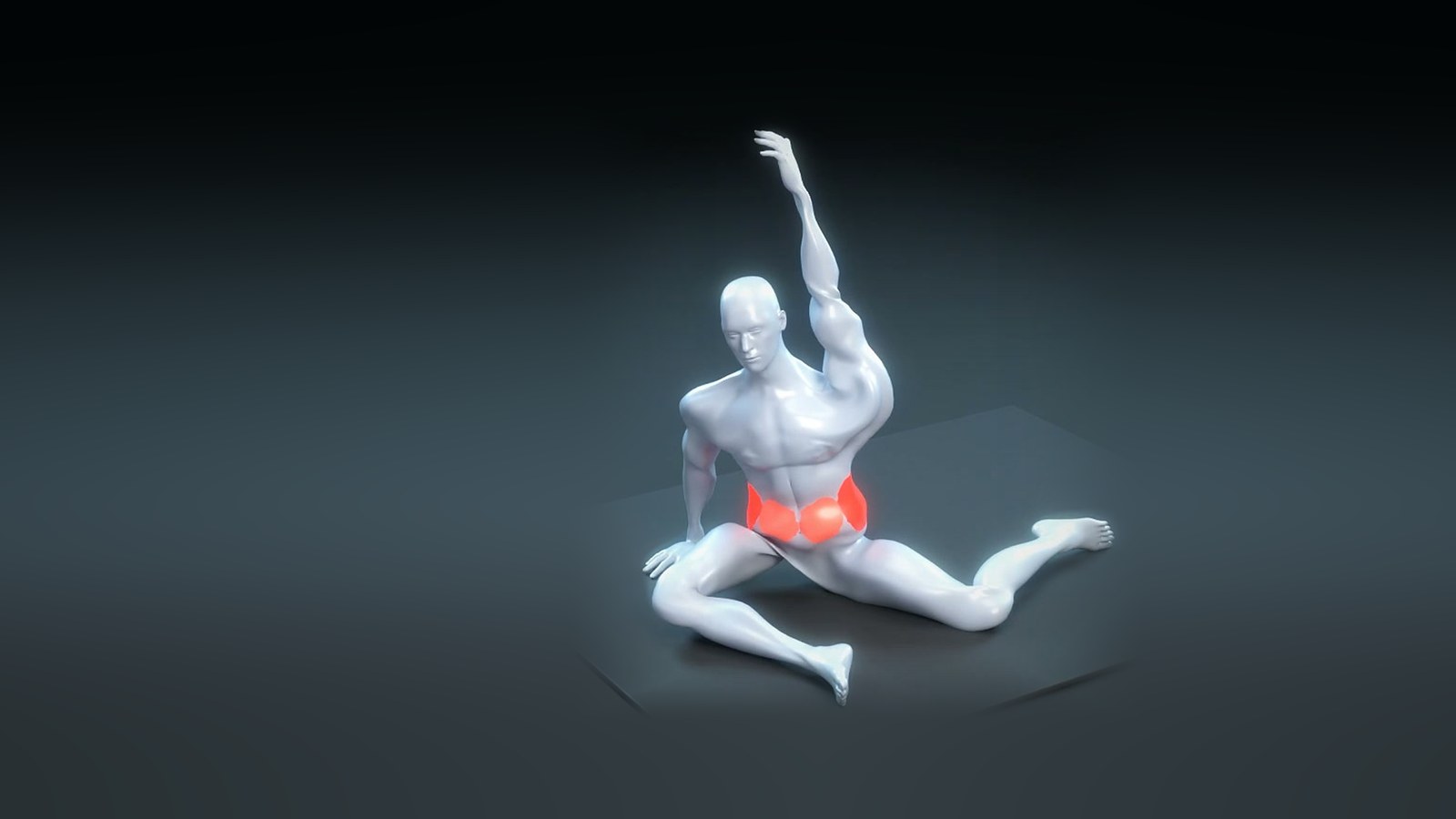
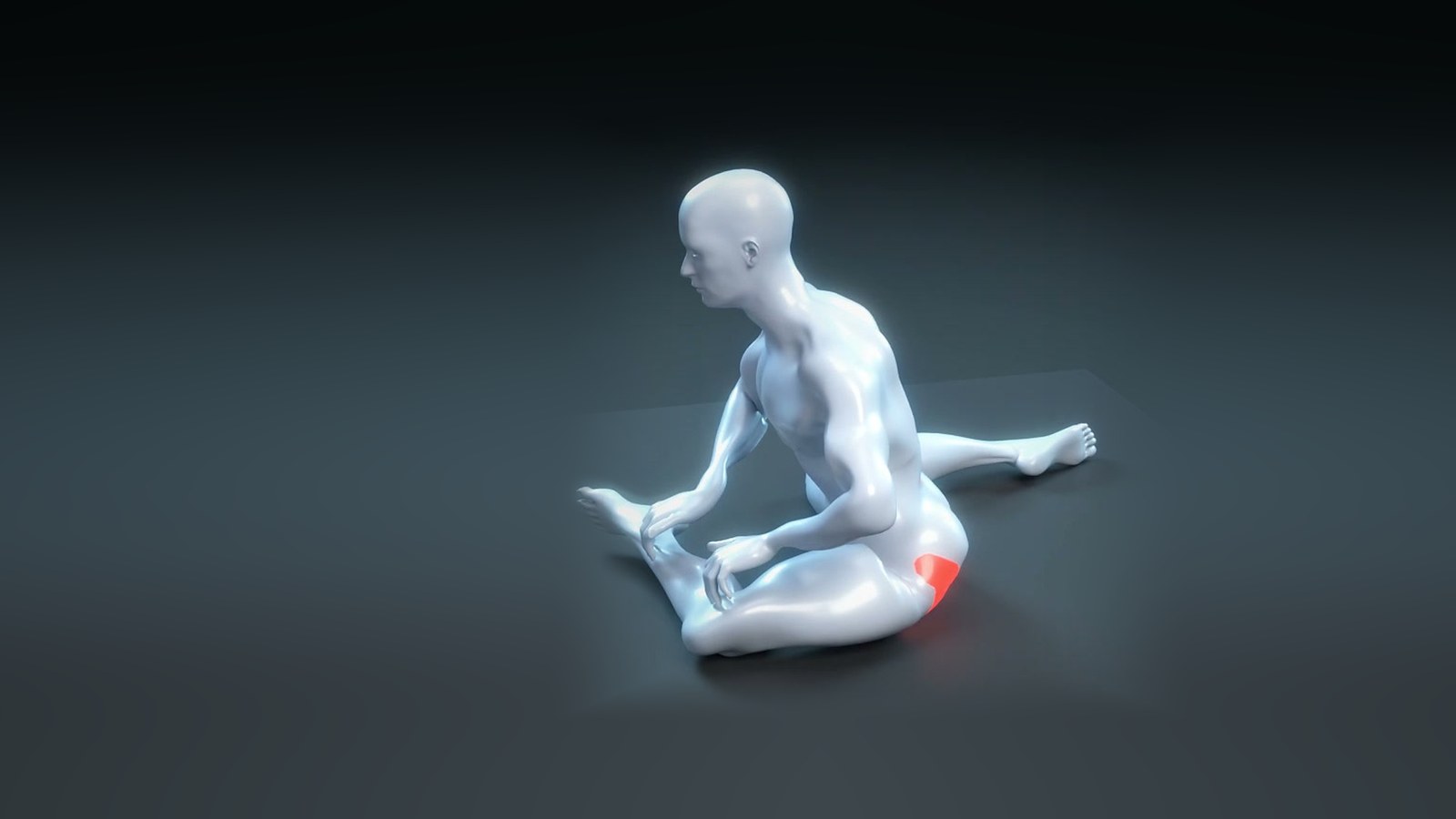
Ankle Dorsiflexion PAILs/RAILs
Mobility

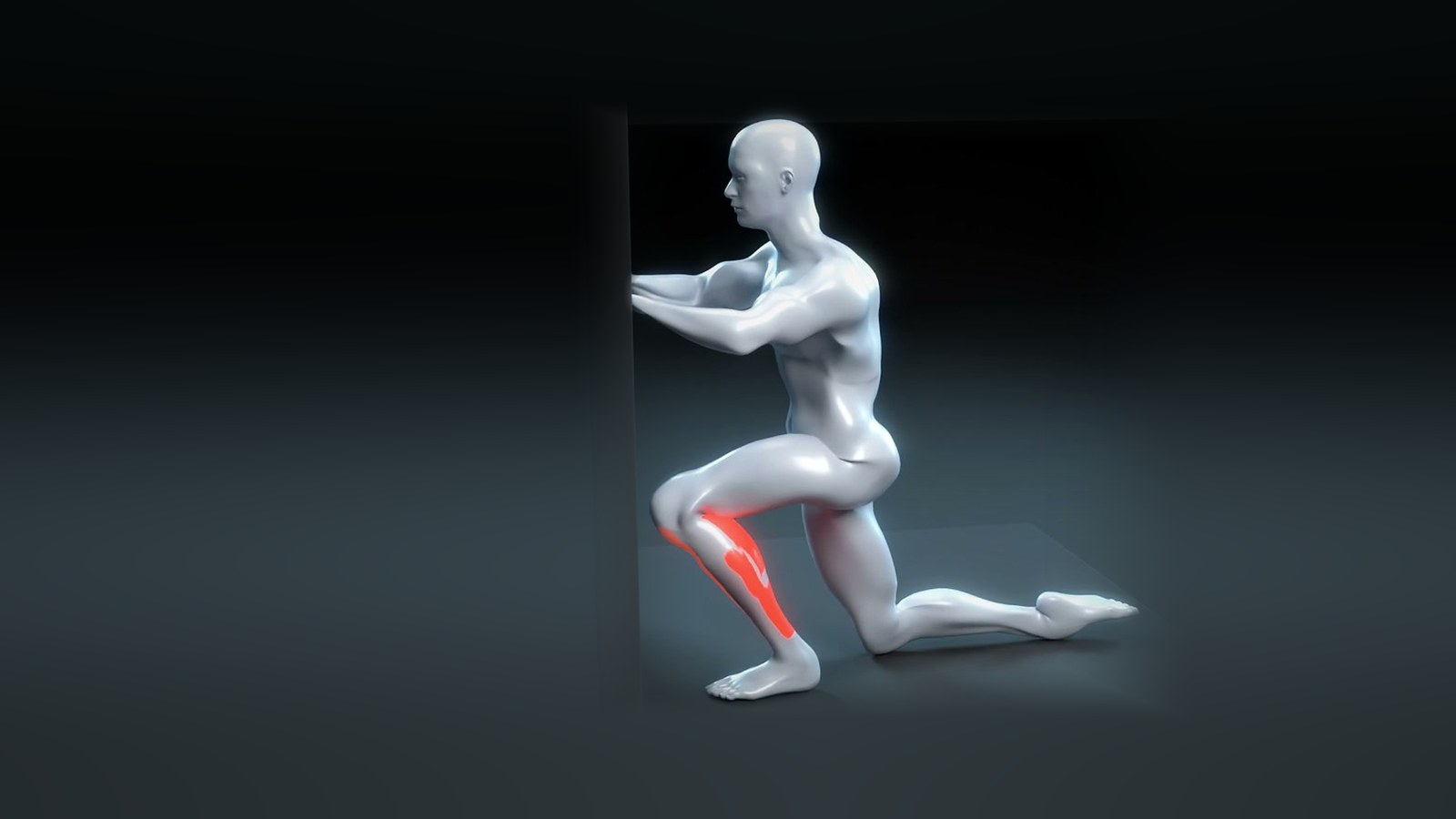
Ankle dorsiflexion PAILs/RAILs is a half-kneeling drill: you drive the front knee forward over a flat foot, then contract into that position in two directions. It is used to train the calf (soleus) of the front ankle to work at end range, and the muscle on the front of the shin to pull you deeper. The protocol is a 2:00 stretch, PAILs for 1:00 at 80%, RAILs for 1:00 at 80%, then a repeat at 100%: 0:30 pressing and 0:30 lifting. Ankle mobility is one of the things we assess when someone has knee pain or can't reach squat depth.
I'm Sam Pitcairn, founder of Essential Strength. My research background includes ankle biomechanics, and ankle dorsiflexion is the knee-over-toes range you use every time you squat, lunge or walk down stairs. This is the drill from our demo screenshots, with the same headings, times and effort levels you see on screen.
PAILs stands for Progressive Angular Isometric Loading: once you're in a stretch, you contract the tissue being stretched without changing position. RAILs stands for Regressive Angular Isometric Loading: you contract the muscles on the opposite side of the joint to pull yourself deeper into the range. Both are holds, so the position stays the same while the effort changes.
Get into a half-kneeling position facing a wall. Front foot flat on the floor. Back knee, shin and the top of the back foot on the floor. Put both hands on the wall in front of you for support.
Line the front knee up straight over the toes, hips square. The wall keeps you balanced so the ankle, not your balance, decides how far you go.
The four steps are the four phases of the protocol: stretch, PAILs, RAILs, repeat. Don't back out of the position between phases.
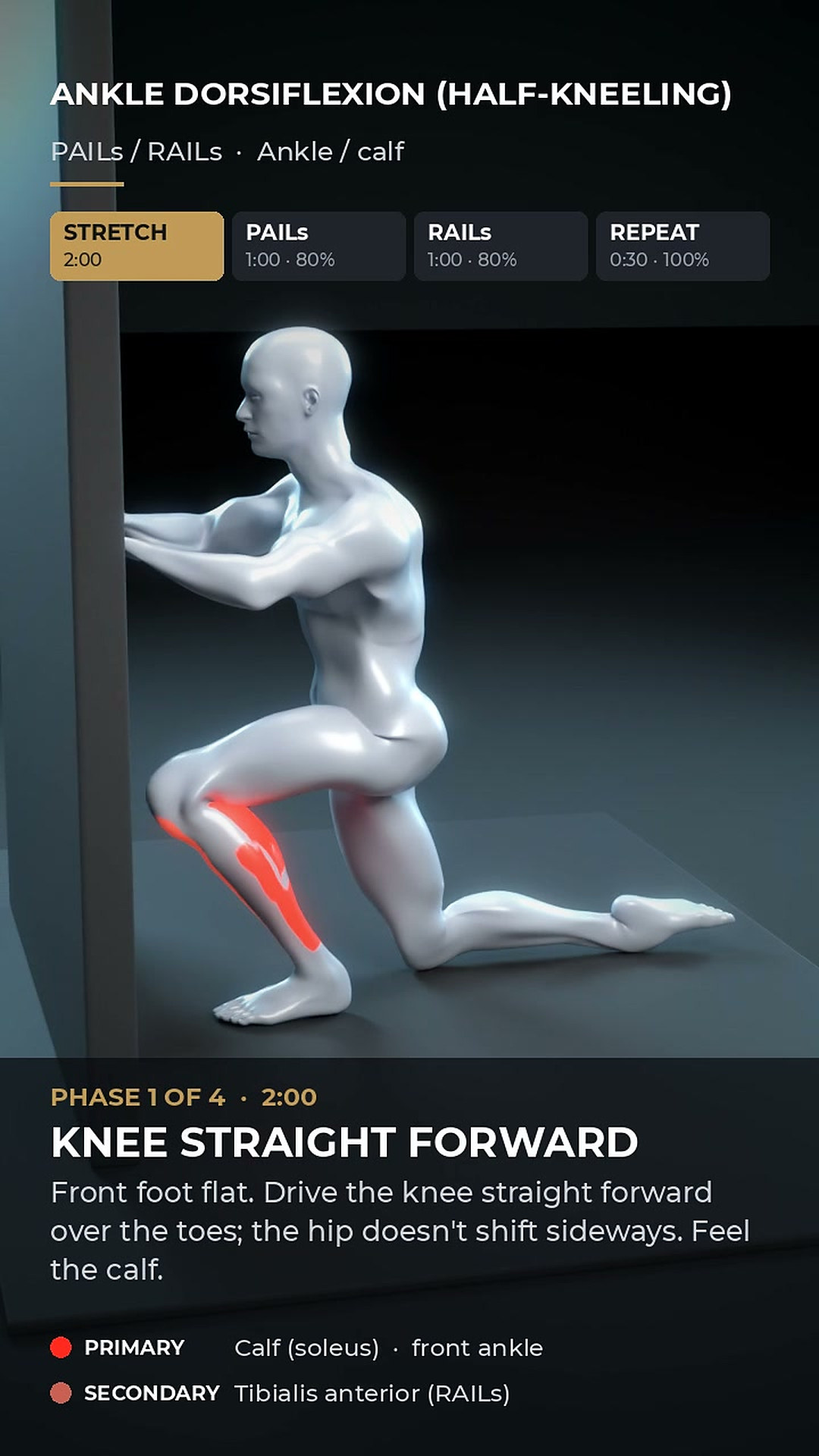
PHASE 1 OF 4 · 2:00
Front foot flat. Drive the knee straight forward over the toes; the hip doesn't shift sideways. Feel the calf.
PHASE 2 OF 4 · 1:00 · 80% EFFORT
Press the forefoot down like a gas pedal. Ramp the tension slowly: 10, 25, 50, 75%. Don't back out.

PHASE 3 OF 4 · 1:00 · 80% EFFORT
Pull the knee further forward and try to lift the forefoot; it must NOT leave the floor. Ramp slowly. Don't back out.

PHASE 4 OF 4 · 0:30 · 100% EFFORT
From the new depth: gas pedal 0:30, then lift 0:30, at 100%, pain-free. Never back out.

Effort is how hard you contract compared with the hardest you could. Build up to it slowly; the 100% phase is still pain-free.
CARs are meant to be done in addition to PAILs/RAILs. After this protocol, follow with ankle CARs to map the joint through the range you just worked. CARs also fit before warm-up sets or between warm-up sets, the same way hip CARs do for the hip.
Stop if you feel pinching or sharp pain at the front of the ankle or anywhere else, and see a clinician before continuing.
Primary: Calf (soleus) · front ankle. This is the tissue being stretched in phase 1 and contracting against the floor in PAILs.
Secondary: Tibialis anterior (RAILs). The muscle on the front of the shin is what tries to lift the forefoot and pull you deeper into dorsiflexion.
People with knee pain, or who can't squat deep without their heels lifting, often end up searching for ankle mobility. The reason coaches look there: in a squat or lunge the knee has to travel forward over the foot, and that takes ankle dorsiflexion. My own published research includes ankle biomechanics and knee function.
At Essential Strength in East Liberty, ankle range is one of the things we assess, and this drill may be part of post-rehab training once you're cleared, for example later in an ACL recovery. It is used to train ankle range and control, not to treat knee pain. If you have pain now, get assessed first.
Ankle dorsiflexion comes up a lot when we talk about knees. If you've been told you have "bad knees," read your knees aren't bad, they're just weak; ankle range is part of that conversation.
The same four-phase protocol runs through the rest of the series. For the hip, see hip internal rotation PAILs/RAILs (90/90), and hip CARs for a full-circle joint check. All of them are collected on the mobility drills hub.
Drills like this can show up in post-rehab personal training and in sports performance training for athletes who need more usable ankle range.
PAILs means pressing the forefoot down into the floor, contracting the stretched calf. RAILs means trying to lift the forefoot and pull the knee further forward, contracting the muscles on the front of the shin.
No. Expect a strong stretch and hard effort in the calf, but the cue on screen is pain-free. Pinching or sharp pain means stop and see a clinician.
Because the drill is a hold, not a movement. The goal is to contract the front of the shin as hard as you can at the deepest position you have, without changing the position.
After. Do the PAILs/RAILs first, then CARs for that joint to map it through the range you just worked. CARs can also be done before warm-up sets or between warm-up sets.
Ankle dorsiflexion is one of the things we assess with knee pain, but this drill is used to train ankle range, not to treat the knee. Get your knee assessed first.
Credits: This drill follows the half-kneeling ankle PAILs/RAILs as taught by Joe Gambino, DPT. CARs and PAILs/RAILs are terms from Functional Range Systems (Functional Range Conditioning® / FRC® and Kinstretch®); Essential Strength is not affiliated with or endorsed by Functional Range Systems.
Not sure where your ankle range stands? Book a free consultation and assessment at our East Liberty facility.
After you submit this form we will be in contact within 24 hrs to set up an appointment to come into our East Liberty location for a performance assessment.