Hip CARs (Controlled Articular Rotations)
Mobility


Hip CARs (controlled articular rotations) are slow, full circles of one hip while you stand on the other leg and hold a rack for support. They are used to train the hip through the biggest range you can actively control, with the pelvis and torso staying still. In a warm-up, do 2–3 slow circles each direction, each leg, at 30–70% tension. They're also one of the hip mobility drills we use in post-rehab training for people with hip or lower back pain, once they've been assessed.
I'm Sam Pitcairn, founder of Essential Strength in East Liberty. Standing hip CARs are one of the drills my clients see in their warm-ups. The point is simple: move the hip through every position it owns, slowly, and don't let anything else do the work for it. Below is the exact sequence from the demo screenshots, with the same headings and cues you see on screen.
Stand next to a rack and put the hand closest to it on the upright. Hold on. The rack is there so balance is not the limiting factor; your hip is.
Stand tall on the support leg with the pelvis level and square to the front. In the demo screenshots the free hand rests on the working hip as feedback, so you can feel if the pelvis starts to hike or turn.
Each circle has four parts. The forward circle comes first, then you run the same path in reverse.
CIRCLE 1 OF 2 · FORWARD
Hand on the rack, hips square. Drive the knee as high as it goes. Torso tall, stance leg still.

CIRCLE 1 OF 2 · FORWARD
Swing the knee out to the side at hip height. Hips keep facing forward; no hip hike.

CIRCLE 1 OF 2 · FORWARD
Turn the hip in: heel rises toward the ceiling, knee stays high. Nothing else moves.

CIRCLE 1 OF 2 · FORWARD
Push back with the heel into extension, close the door behind you, then lower the leg.

CIRCLE 2 OF 2 · REVERSE
Reverse: knee back behind you, heel up. Swing it out to the side. Pelvis level.

CIRCLE 2 OF 2 · REVERSE
Turn the hip out until the shin hangs straight down under the knee.

CIRCLE 2 OF 2 · REVERSE
Sweep the knee forward and up to the chest, then lower slowly. 2–3 each way, each leg.

Quadruped hip CARs are the same hip circle done on all fours. With both hands and the other knee on the floor, you don't have to balance on one leg, and the job is simple: keep the spine and pelvis still while one hip moves. Use this version when it's the one in your program, or when the standing version turns into a balance drill.
CIRCLE 1 OF 2 · FORWARD
Hands under shoulders, knees under hips. Lift the knee and bring it forward. Spine stays still.

CIRCLE 1 OF 2 · FORWARD
Open the knee out and up. Hips have headlights: keep them pointing at the floor.

CIRCLE 1 OF 2 · FORWARD
Turn the hip in so the heel rises. Smaller circle than you think; no weight shift.

CIRCLE 1 OF 2 · FORWARD
Push the knee straight back into extension without arching, then return it under the hip.

CIRCLE 2 OF 2 · REVERSE
Reverse: knee back first, heel up. Pelvis level, low back quiet.

CIRCLE 2 OF 2 · REVERSE
Turn the heel down and keep the knee high as it swings out to the side.

CIRCLE 2 OF 2 · REVERSE
Sweep the knee forward to the chest, then set it down under the hip. 2 each way, each leg.

Quadruped dose: 2 each direction, each leg, at warm-up tension (30–70%). Same rules as standing: hips face the floor, no weight shift, and a smaller circle than you think.
When to do quadruped hip CARs: the same as standing. Do them after hip PAILs/RAILs to map the joint through the range you just worked, or before or between warm-up sets.
Tension here means how hard you squeeze the muscles around the hip while you move. Enough to own the position, not so much that you start shaking or compensating.
CARs are meant to be done in addition to PAILs/RAILs, not instead of them. Here's how I use them:
Stop if you feel pinching or sharp pain in the hip or groin, and see a clinician before you keep going.
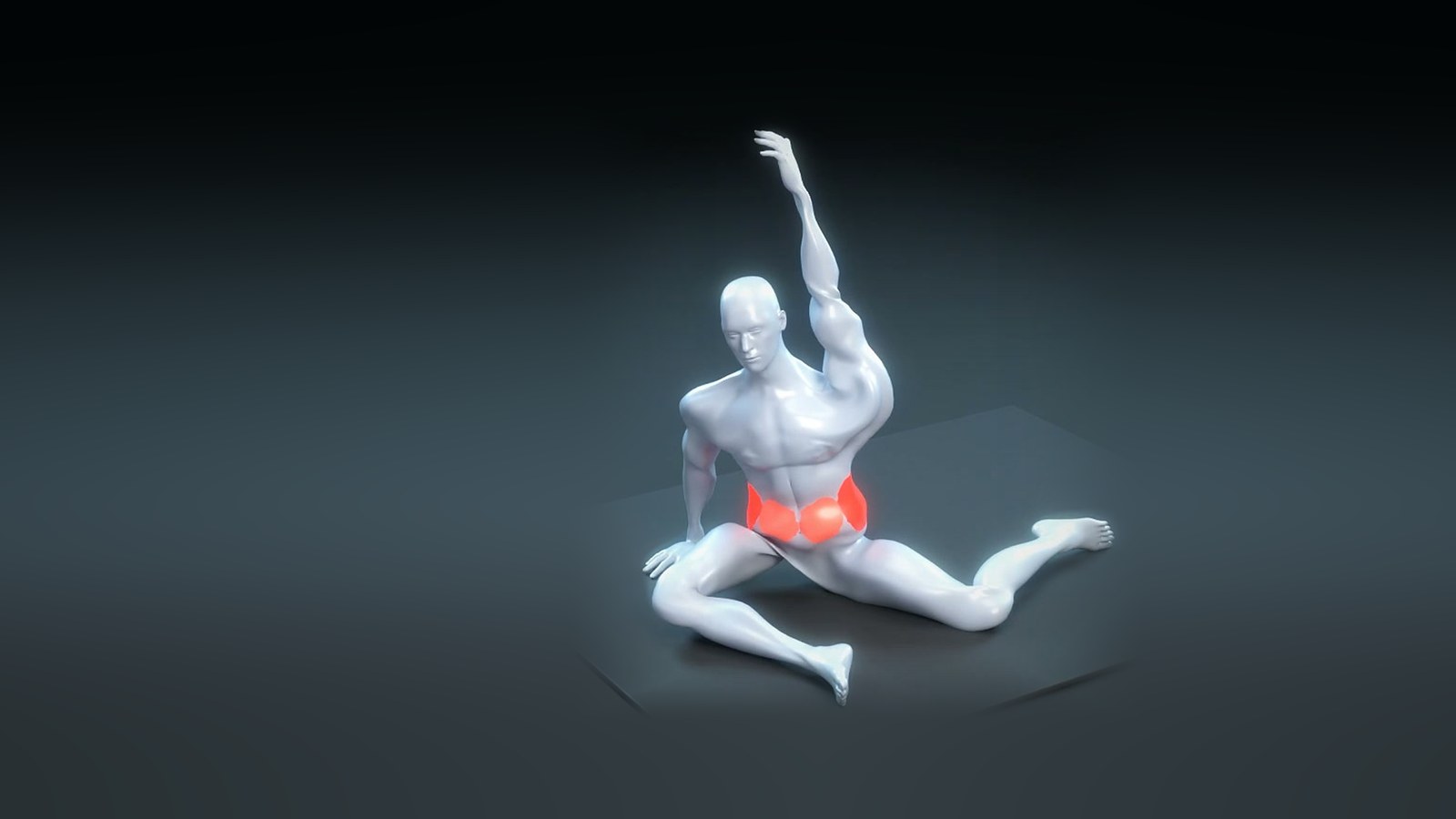
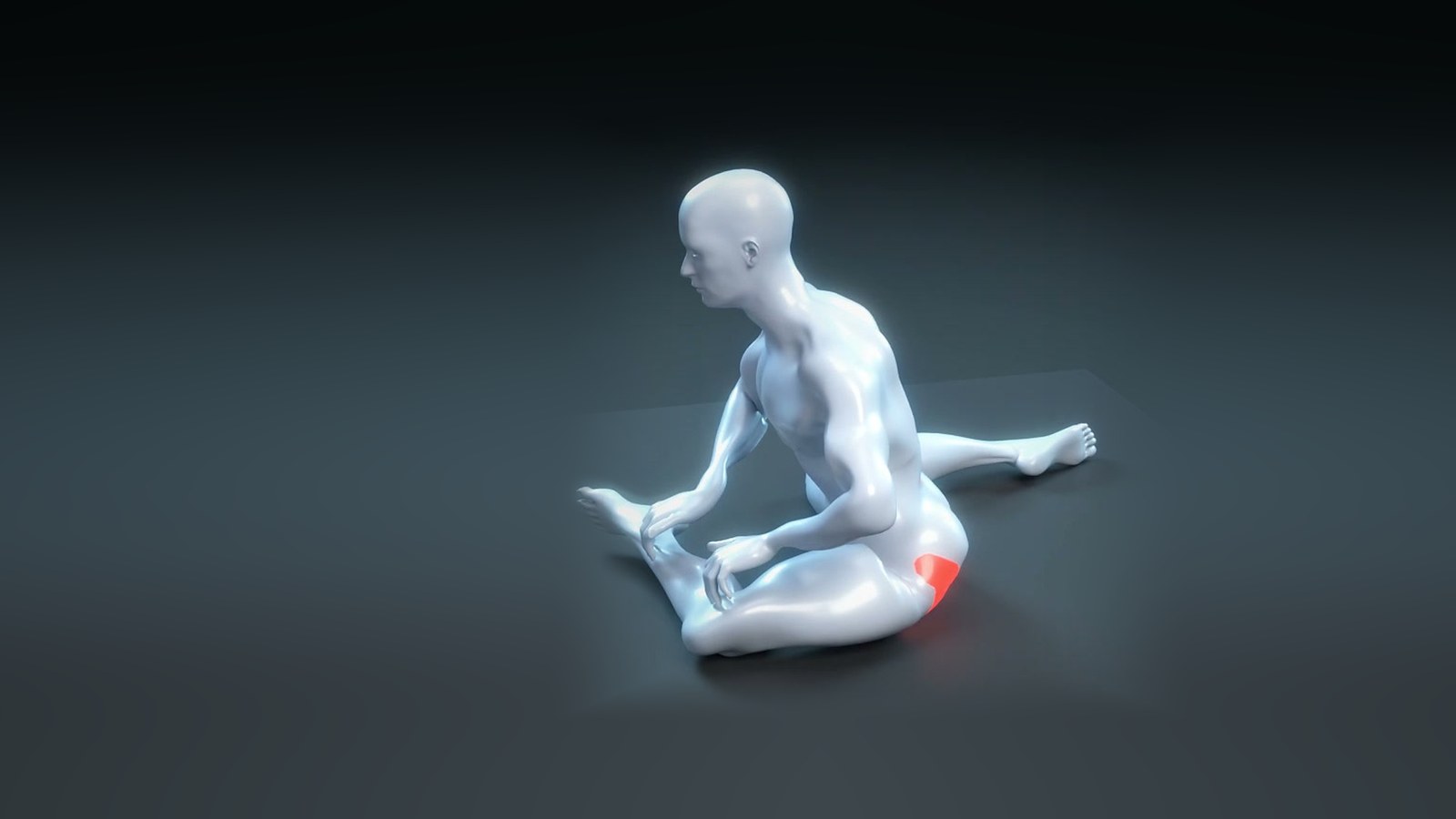
Primary: Hip (working side). CARs are a joint drill more than a single-muscle drill: the muscles around the hip take turns controlling the thigh as it moves through flexion, abduction, rotation and extension. The demo highlights the outside of the working hip.
People with lower back pain often search for hip mobility exercises, and there's a reason coaches look at the hips: the hips and low back share the work of bending and turning.
At Essential Strength in East Liberty, hip CARs are one of the things we assess, and they may be part of post-rehab training once a clinician has cleared you. They are used to train hip control, not to treat back pain. If you're hurting now, get assessed first. For more on back pain, read don't get back surgery and why your sciatica won't go away.
I use hip CARs in the warm-up to check in with the joint before loading it. If you've been sitting all day, at a desk or in a lecture hall, they're a quick way to see how much hip range you actually control right now. I wrote more about that in posture and injuries after finals week.
The same approach applies to the shoulder: shoulder CARs use the same slow, one-joint circle for the shoulder. Once you know where the hip is limited, the next step is usually a targeted drill. For hip internal rotation, that's hip internal rotation PAILs/RAILs (90/90). For the ankle, see ankle dorsiflexion PAILs/RAILs. Every drill in the series lives on the mobility drills hub.
If you're working back from an injury, this kind of drill can be part of post-rehab training. For athletes, it shows up inside sports performance training.
In a warm-up I program 2–3 slow circles each direction, on each leg, at 30–70% tension. Quality of the circle matters more than the count.
No. You may feel the muscles working hard at the edges of the circle, but pinching or sharp pain means stop, shrink the circle, and get it checked by a clinician.
Holding the rack takes balance out of the equation so you can focus on the hip. If you're wobbling on the stance leg, the working hip never gets your full attention.
After. Do the PAILs/RAILs first, then CARs for that joint to map it through the range you just worked. CARs can also be done before warm-up sets or between warm-up sets.
Hip CARs are used to train hip control, and hip movement is one of the things we look at with lower back pain. They are not a treatment for back pain, so if you have pain now, get assessed before you start.
Both use the same hip circle. Standing hip CARs are 2–3 each way with a hand on a rack; quadruped hip CARs are 2 each way on all fours. Do the version in your program.
Credits: This drill follows the standing hip CAR as taught by Cleveland Clinic and Markow Training Systems. CARs and PAILs/RAILs are terms from Functional Range Systems (Functional Range Conditioning® / FRC® and Kinstretch®); Essential Strength is not affiliated with or endorsed by Functional Range Systems.
Want to know how your hips actually move? Book a free consultation and assessment with our team in East Liberty.
After you submit this form we will be in contact within 24 hrs to set up an appointment to come into our East Liberty location for a performance assessment.