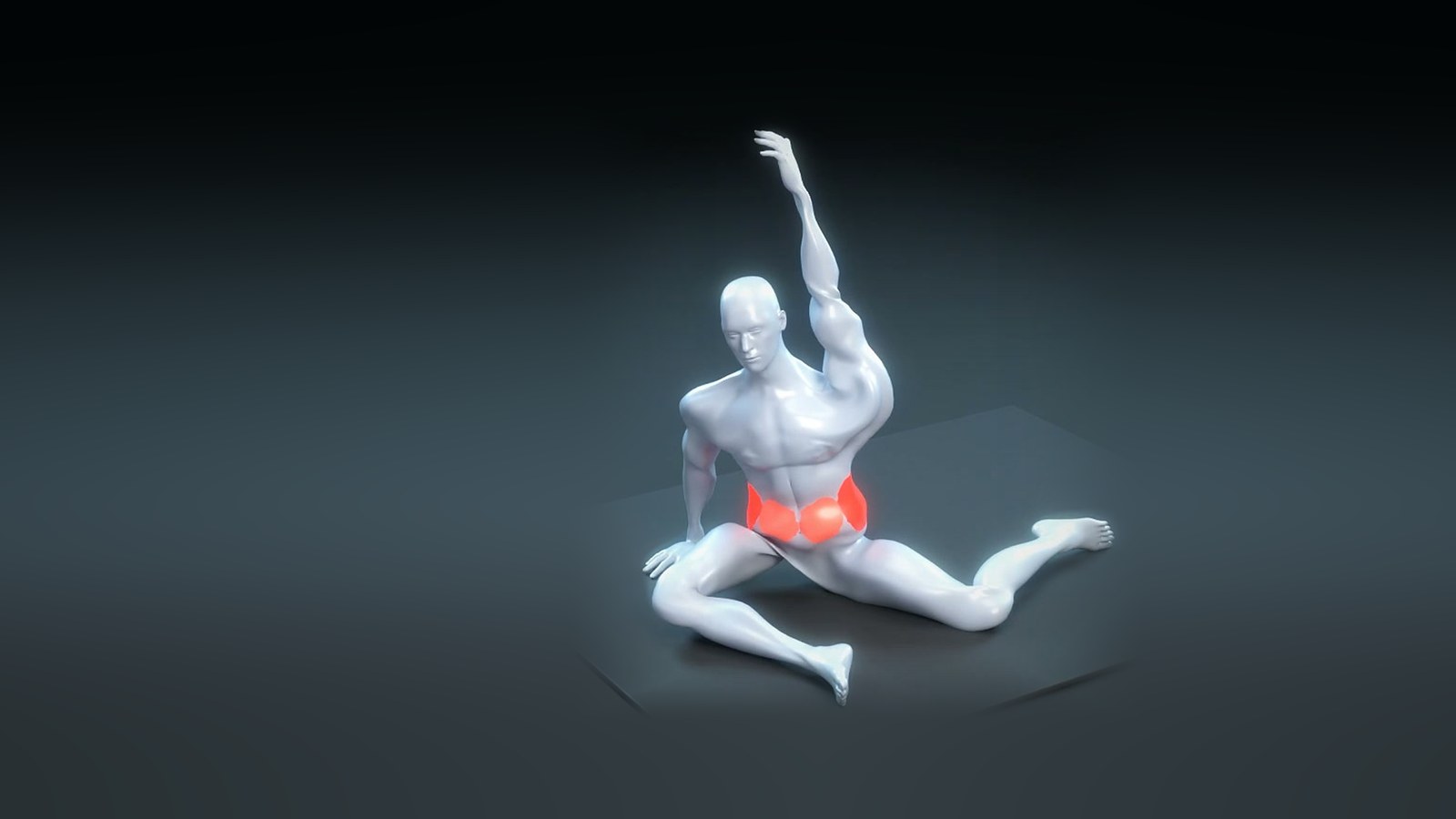
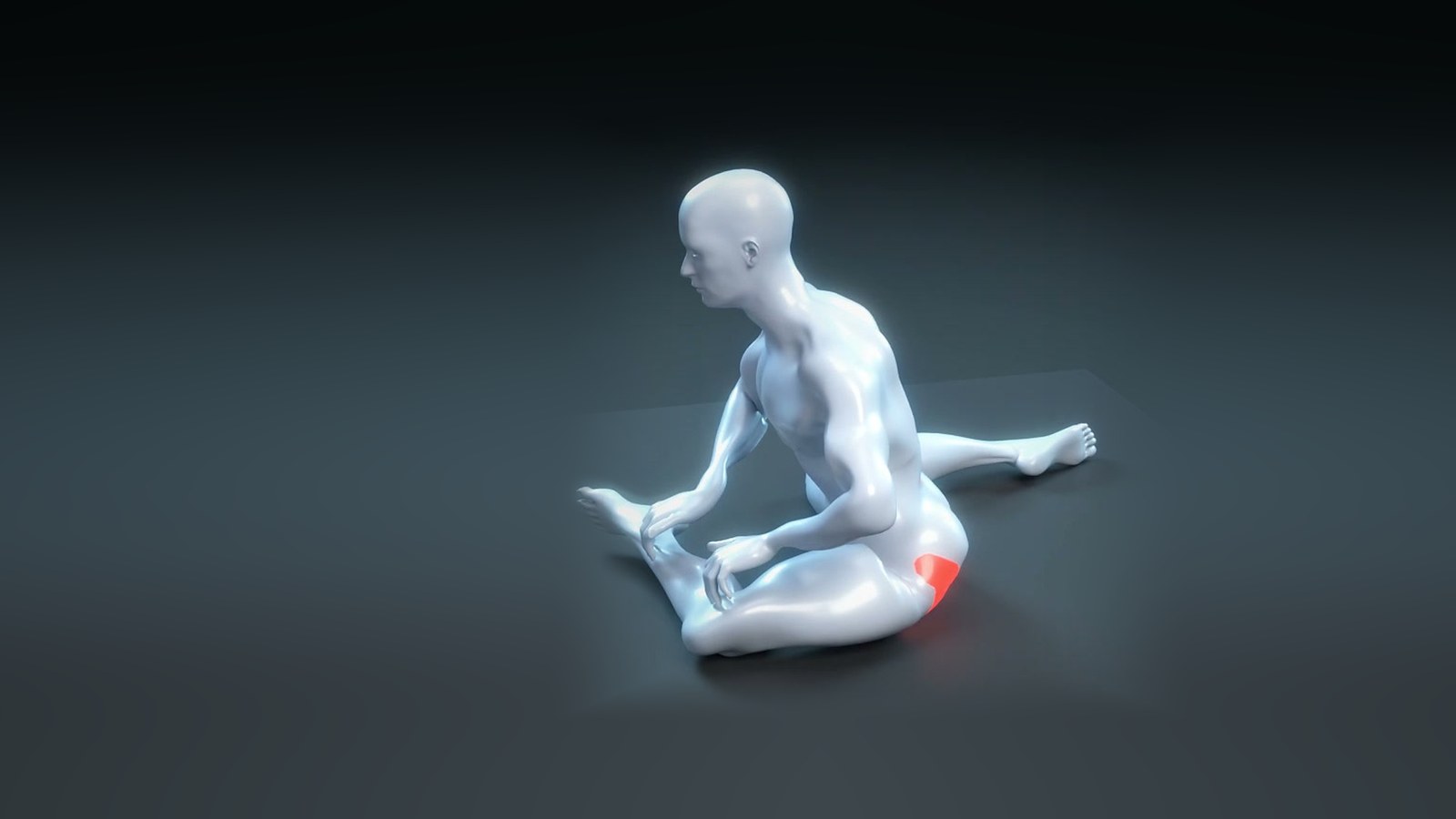
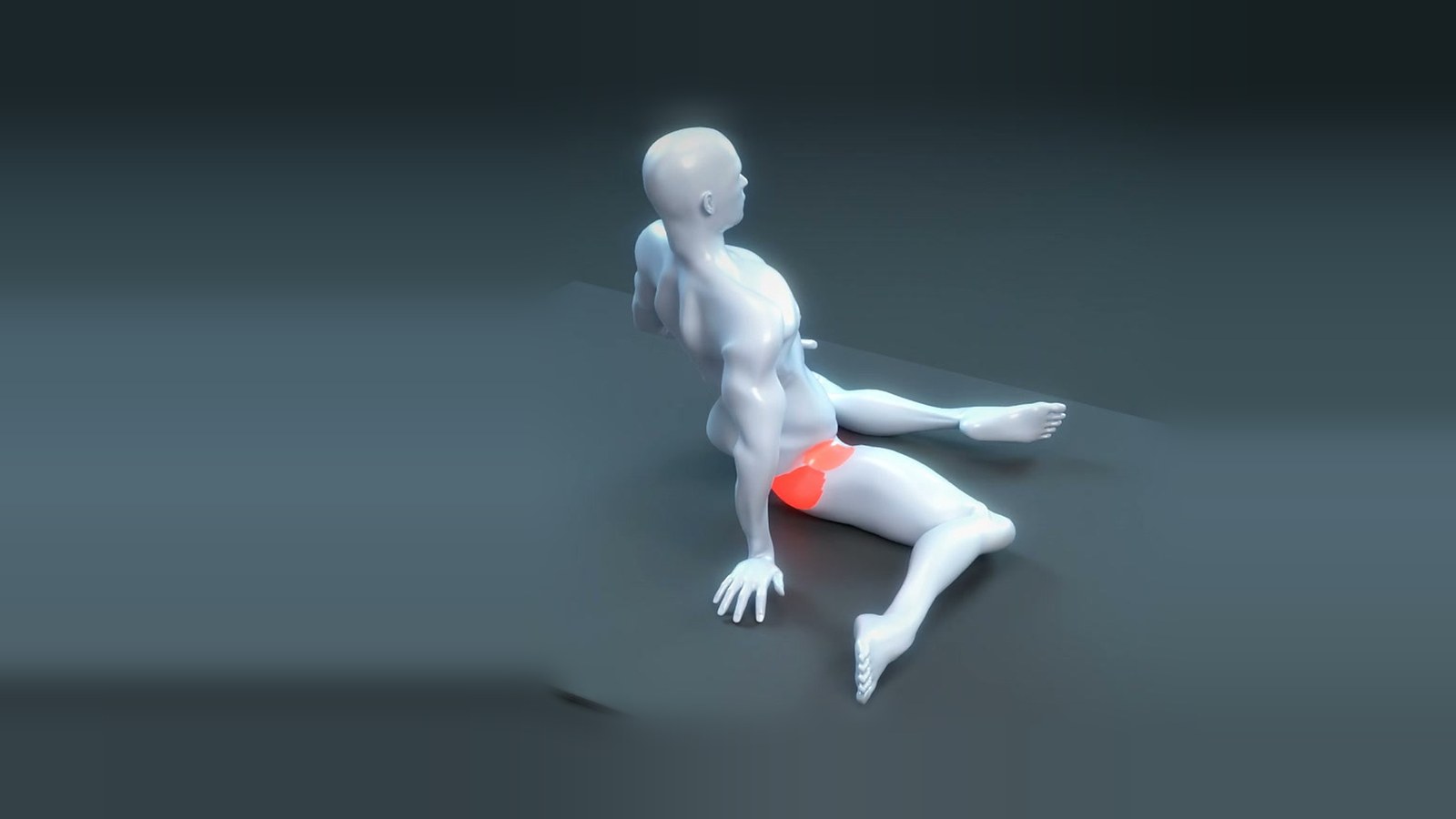
Shoulder CARs (Controlled Articular Rotations)
Mobility


Shoulder CARs (controlled articular rotations) are slow, full circles of one arm through the biggest range the shoulder can control, while the rest of the body stays still. You start palm forward in front of you, raise the arm overhead with a straight elbow, then turn it in and reach behind to the back pocket, and reverse. In a warm-up, do 3 each direction, each arm, at 30–70% tension. They're also part of how we work with clients returning from shoulder pain or shoulder surgery, once they've been assessed and cleared.
I'm Sam Pitcairn, founder of Essential Strength in East Liberty. This post covers Shoulder CARs Level 1, the version my clients see in their programs. The goal, in my words: map the full range of motion. You're not trying to make the circle look big. You're finding out exactly where the shoulder can go on its own, and owning every inch of that path.
Stand tall. You'll work one arm at a time, one side, slowly. The other arm stays relaxed and still.
Start with the working arm in front of you, palm facing forward. That's the arm turned out, which is where the circle begins. Straighten the elbow and make a tight fist. Brace your abs and keep your ribs down before the arm moves.
Level 1 is one path, done forward and then in reverse. On screen it's shown as two steps.
REP 1 OF 2 · FORWARD · WARM-UP 30–70%
Palm forward, straight elbow. Elbow to the ear, then turn the arm in and reach behind to the back pocket.

Raise the arm in front of you until the elbow is by your ear. From the top, rotate the arm inward and reach around behind you as high as you can, finishing with the hand behind the back pocket.
REP 2 OF 2 · REVERSE · WARM-UP 30–70%
Abs on, ribs down, tight fist. Only the shoulder moves: no leaning, no shrugging.
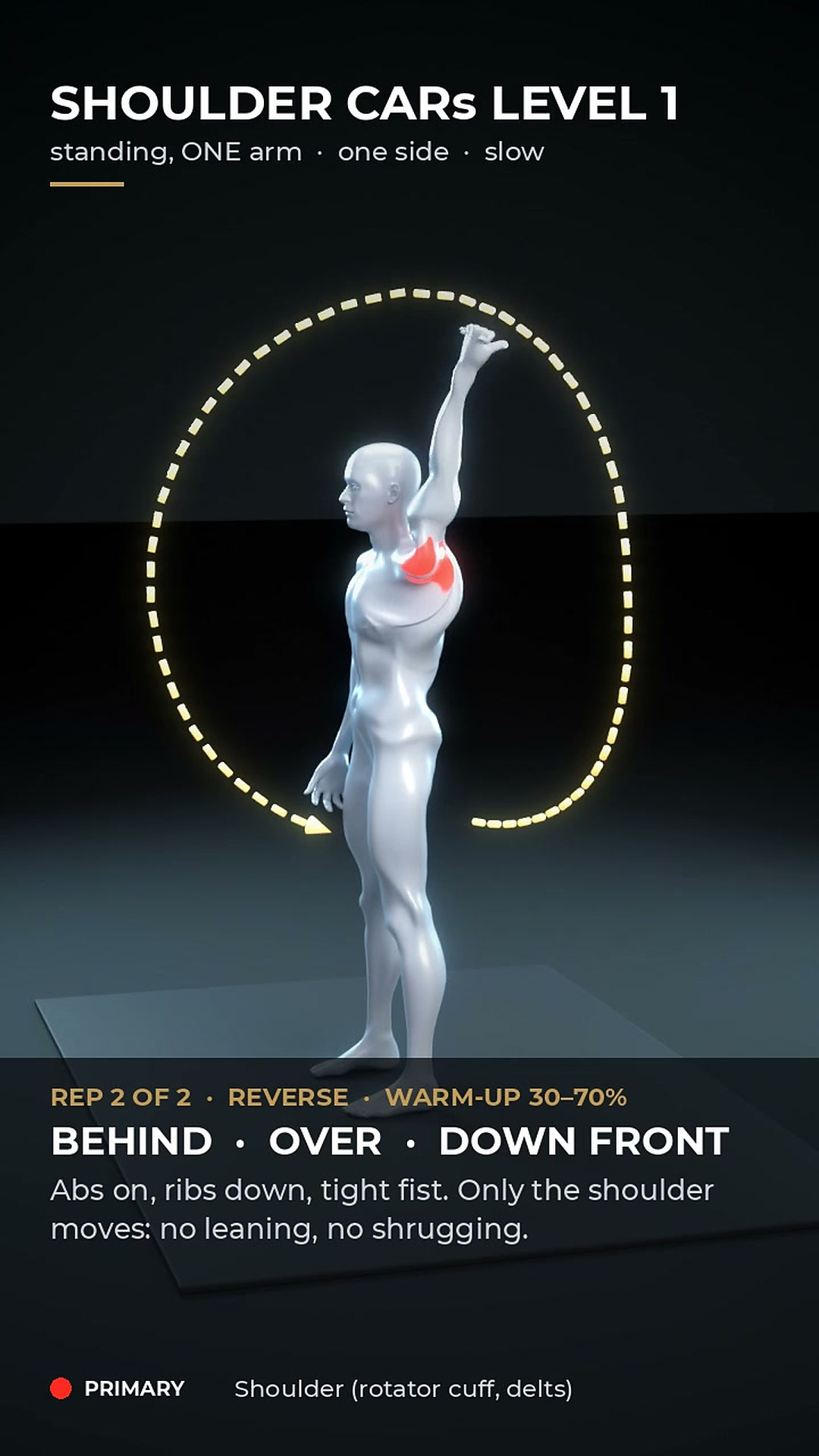
Run the same path backwards: from behind the back pocket, up and over, and back down in front with the palm facing forward.
The shoulder rotation CAR isolates one part of the shoulder circle: rotation. The upper arm stays still with the elbow bent 90°, and the shoulder turns the forearm back, then down and forward. Small range is fine; the goal is that the rotation comes from the shoulder, not the hand.
Stand tall. Lift the working arm so the elbow is at shoulder height and bent 90°, with a closed fist. The other arm stays relaxed. Ribs down before you start.
REP 1 OF 2 · WARM-UP 30–70%
Elbow at shoulder height, bent 90°. The upper arm stays still; turn the forearm back, then down and forward.
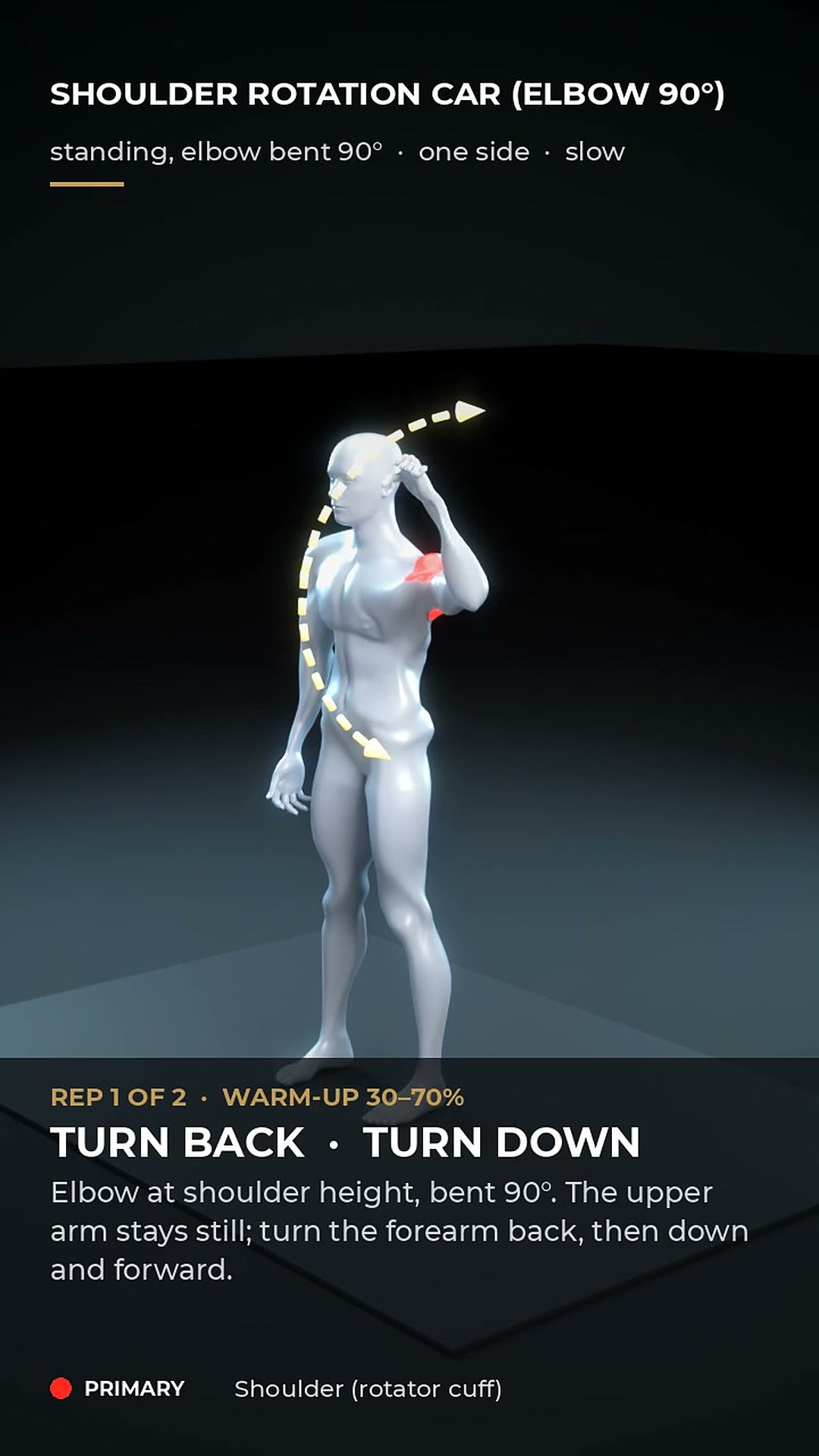
REP 2 OF 2 · WARM-UP 30–70%
Rotation comes from the shoulder, not the hand. Small range is fine. Ribs down, no arching.
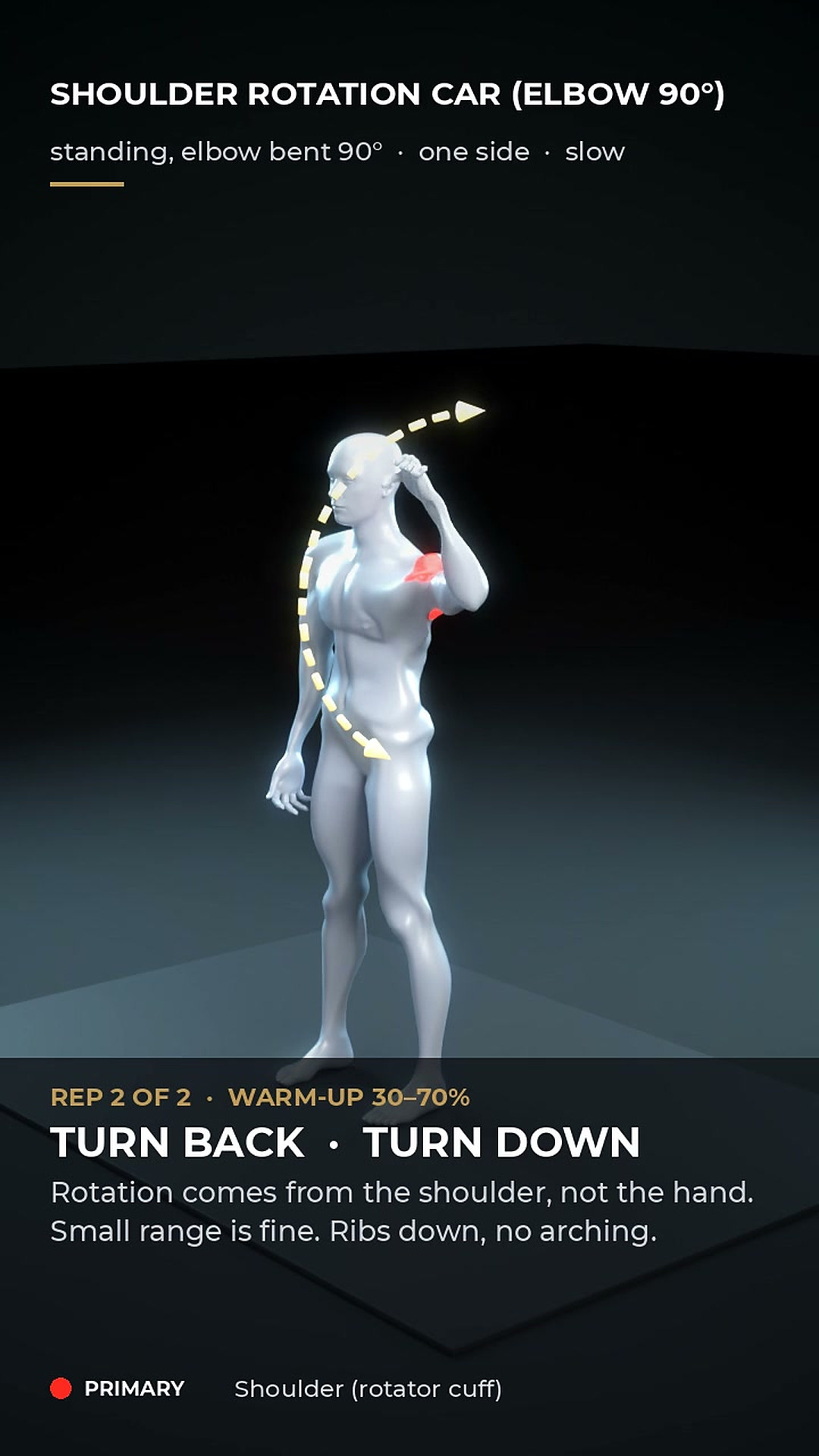
Rotation CAR dose: 3 each direction, at warm-up tension (30–70%). The demo shows two reps so you can see the path.
Common mistakes: letting the elbow drift or drop so the upper arm moves; flicking the wrist to fake range; arching the low back as the forearm turns back. If any of those show up, make the range smaller.
When to do the rotation CAR: the same as Shoulder CARs Level 1. If your program has shoulder PAILs/RAILs, do it after them to map the joint through the range you just worked. It also fits before or between warm-up sets.
Tension means how hard you squeeze the muscles around the shoulder while you move. Enough to control every part of the circle, not so much that you start shaking or compensating.
CARs are meant to be done in addition to PAILs/RAILs, not instead of them:
Stop if you feel pinching or sharp pain in the shoulder, and see a clinician before you keep going.
Primary: Shoulder (rotator cuff, delts). Like every CAR, this is a joint drill more than a single-muscle drill: the muscles around the shoulder take turns controlling the arm as it moves through raising, rotating and reaching behind.
When someone comes in with shoulder pain, or after shoulder surgery and physical therapy, one of the things we assess is how much range the shoulder can control on its own, not how far it can be pushed. A slow shoulder CAR shows that quickly: where the circle gets small, where the ribs flare, where the shoulder shrugs.
At Essential Strength in East Liberty, shoulder CARs are one of the things we assess and may be part of post-rehab training once you're cleared. They are used to train shoulder control, not to treat pain. If your shoulder hurts now, get assessed first. See shoulder surgery and stuck in the PT loop.
Shoulder CARs live in the warm-up, at warm-up tension, as a check-in with the joint before the session. They pair with hip CARs, which use the same slow, one-joint circle for the hip.
If you want to go deeper on a single range, the PAILs/RAILs drills in this series target one position at a time, like hip internal rotation PAILs/RAILs (90/90) and ankle dorsiflexion PAILs/RAILs. Every drill is collected on the mobility drills hub.
If you sit at a desk or study for long stretches, posture and injuries after finals week covers why moving every joint matters. Drills like this can show up in post-rehab personal training and sports performance training.
In a warm-up I program 3 slow circles each direction, on each arm, at 30–70% tension. Quality of the circle matters more than the count.
No. You may feel the muscles working hard behind your back and overhead, but pinching or sharp pain means stop, shrink the circle, and get it checked by a clinician.
So the range comes from the shoulder, not from arching your low back or leaning. If the trunk moves, you're no longer measuring what the shoulder can do.
After. Do the PAILs/RAILs first, then CARs for that joint to map it through the range you just worked. CARs can also be done before warm-up sets or between warm-up sets.
Get assessed first. If you are cleared to train, keep the circle pain-free and smaller; stop if you feel pinching or sharp pain.
Level 1 takes a straight arm through a full circle overhead and behind you. The rotation CAR keeps the upper arm still with the elbow bent 90° and only rotates the shoulder.
Credits: This drill follows the shoulder CAR as taught by Athletes' Potential and the Markow Training Systems 5-step guide. CARs and PAILs/RAILs are terms from Functional Range Systems (Functional Range Conditioning® / FRC® and Kinstretch®); Essential Strength is not affiliated with or endorsed by Functional Range Systems.
Want to know how your shoulders actually move? Book a free consultation and assessment with our team in East Liberty.
After you submit this form we will be in contact within 24 hrs to set up an appointment to come into our East Liberty location for a performance assessment.