PRI Breathing (Postural Restoration Institute)
Mobility

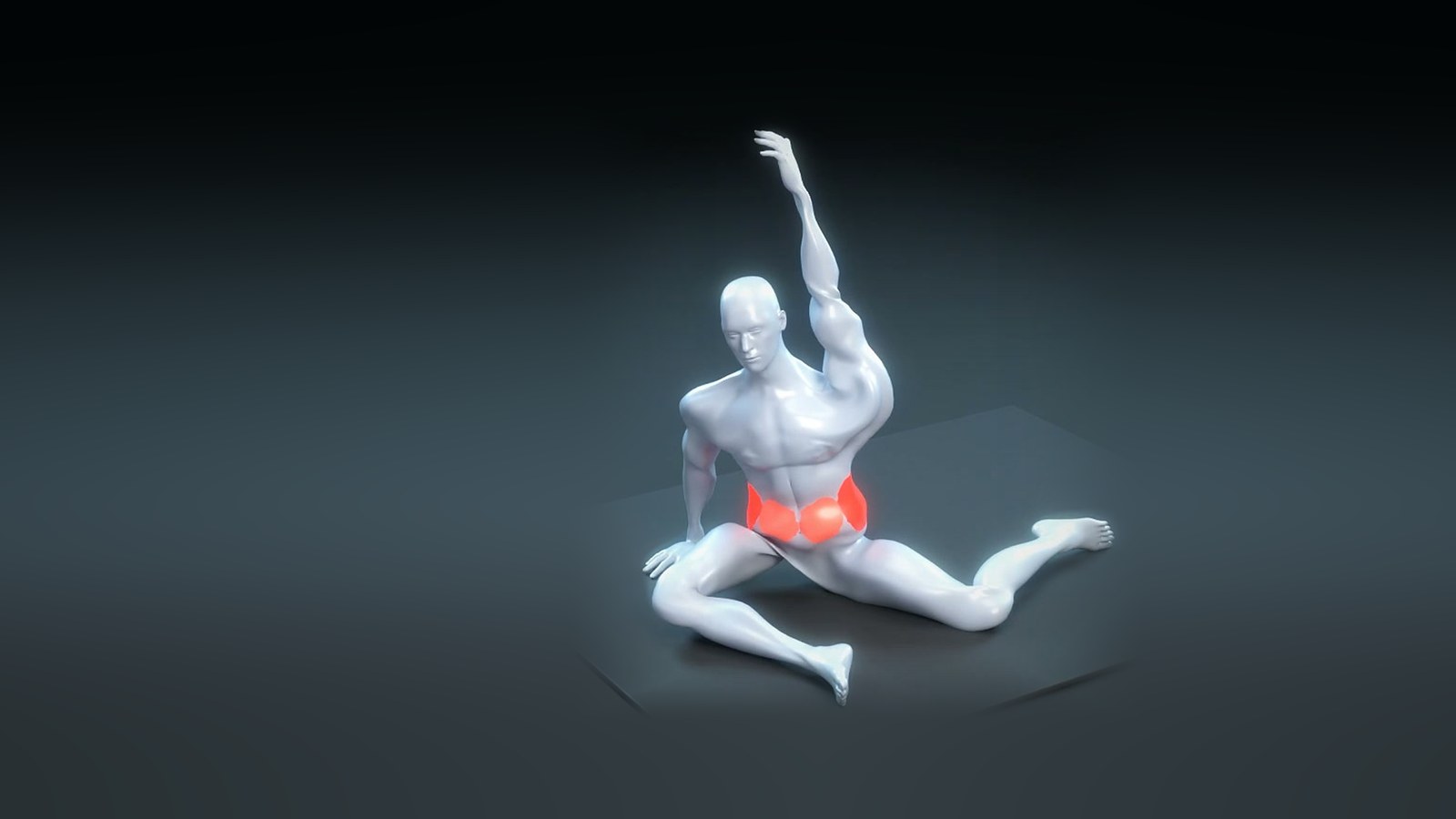
PRI breathing is a set of three breathing positions done slowly: legs 90/90 on a box, a 90/90 sit with the right leg in front, and cat-cow with the left hand on a block. In each position you inhale through the nose for 4 seconds, exhale fully through the mouth for 6–8 seconds, pause, and repeat for 15 breaths. The why: your posture is the position your ribcage and pelvis live in, that position is set largely by how you breathe, and these positions are used to train a different one.
I'm Sam Pitcairn, founder of Essential Strength in East Liberty. I call PRI breathing the X factor for posture, and it's first in the warm-up for a reason. This post covers PRI Breathing as it appears in our clients' programs, the shorter PRI Warm Up, and why every position is set up the way it is.
Good posture isn't "shoulders back." It's where your ribcage and pelvis sit, all day, without you thinking about it. You take somewhere around 20,000 breaths a day, and every one of them either reinforces that position or changes it. That's why we start with breathing instead of cueing your shoulders.
The body is not symmetrical. Your liver sits on the right, your heart on the left, and the diaphragm works differently on each side. Gravity takes advantage of that over years. The Postural Restoration Institute (PRI) built its model around this asymmetry, and it describes a pattern most people drift into.
The common pattern looks like this: weight shifted onto the right leg, ribs flared up and out (especially on the left), pelvis tipped forward, low back arched, and the left side of the abdominal wall not doing its job. PRI calls a version of this the Left AIC pattern. In it, the hamstrings sit long and weak and the abs are effectively switched off, which is the same pelvic picture I wrote about in don't get back surgery.
One term is worth knowing: the zone of apposition. It's the part of the diaphragm that sits against the inside of the lower ribs. When the ribs flare, you lose it; a full exhale with the ribs down brings it back, and that's what these positions are built to practice.
The 90/90 positions (hips and knees bent to 90°) put the pelvis in a more neutral spot, so the breathing does the work instead of the low back arching to help.
Every position is one-sided on purpose. Follow the setup exactly; don't swap sides unless your program says so.
POSITION 1 OF 3 · 15 BREATHS · INHALE
Calves on the box, hips and knees at 90°. Right arm overhead. Inhale through the nose, 4 s.

POSITION 1 OF 3 · 15 BREATHS · EXHALE
Exhale fully through the mouth, 6–8 s, and crunch the left ribs down toward the left hip. Pause.

Why: The left ribs are the ones that tend to flare. Crunching them toward the left hip on a full exhale switches the left obliques and deep abs back on and brings those ribs down.
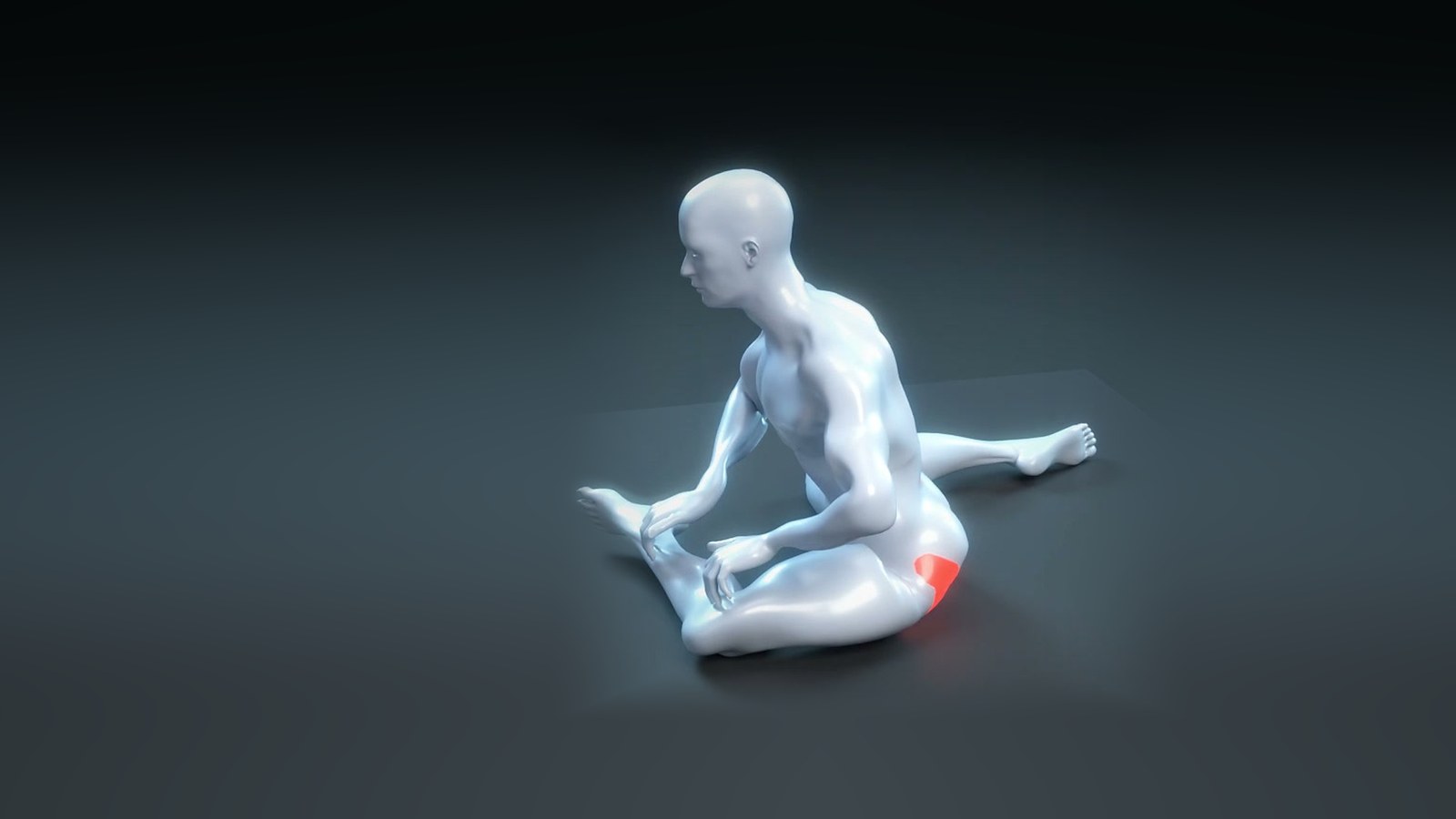
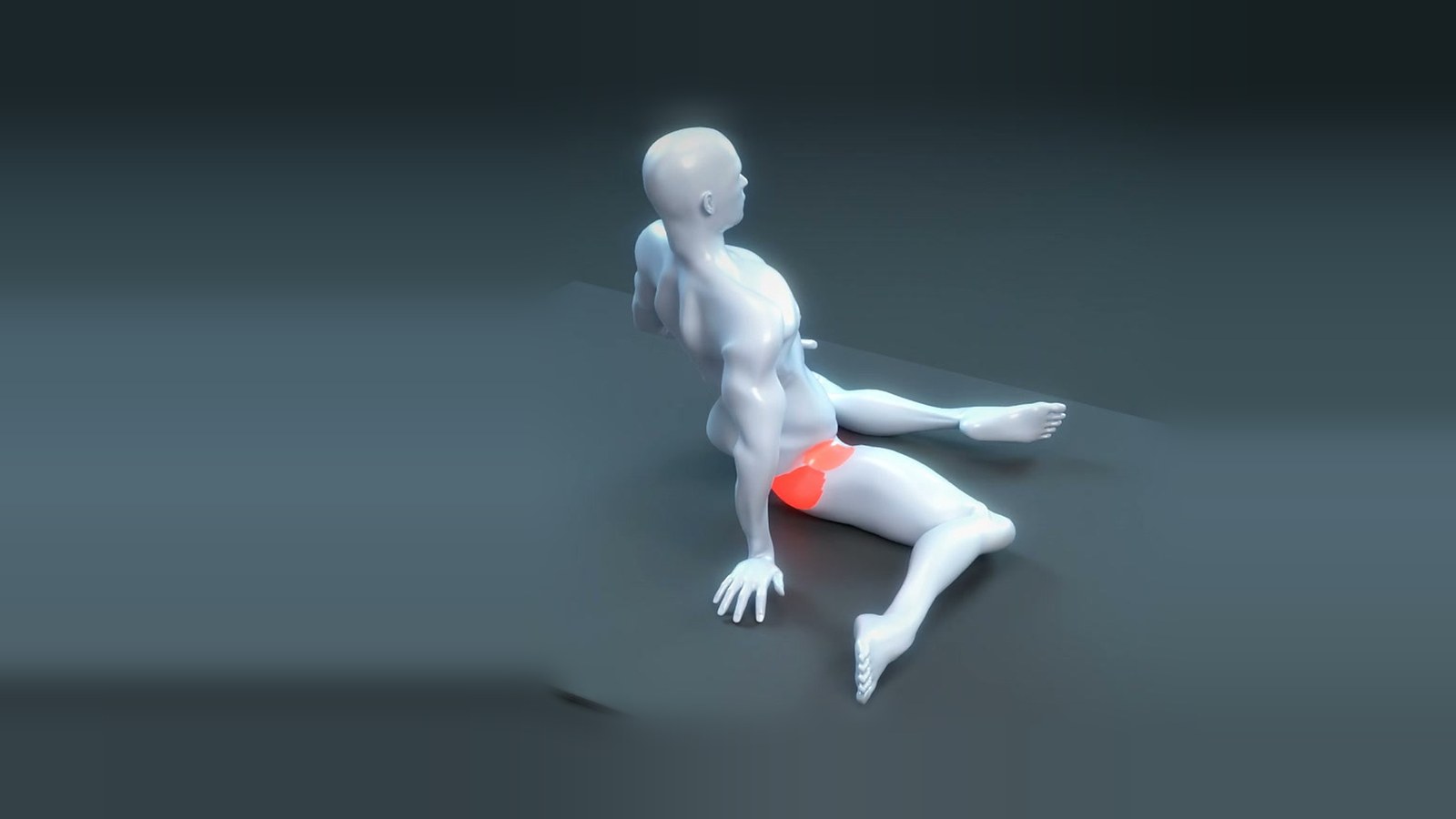
POSITION 2 OF 3 · 15 BREATHS · INHALE
Right leg in front, right hand on the floor, left arm up. Inhale 4 s into the right shoulder.

POSITION 2 OF 3 · 15 BREATHS · EXHALE
Exhale fully through the mouth, 6–8 s: ribs down. Pause, then the next breath.

Why: In this pattern the right upper chest wall tends to get compressed. Breathing into the right shoulder is used to expand that side, while the exhale keeps the ribs down.
POSITION 3 OF 3 · 15 BREATHS · INHALE
Hands under shoulders, left hand on a block, knees under hips. Inhale 4 s, back sags a little.

POSITION 3 OF 3 · 15 BREATHS · EXHALE
Exhale fully 6–8 s and round the back up (cat): push the floor away, ribs down. Pause.

Why: The block raises the left side, so as you push the floor away and round up, you reach and round through the left side with the ribs down.
Why the long exhale and the pause: a complete exhale is what lets the ribs come down and the abs engage. The pause lets you hold that ribs-down position for a moment, so the next inhale fills without flaring the ribs back up.
Stop if you feel dizzy, lightheaded or any pain, return to normal breathing, and see a clinician if it doesn't settle.
Primary: Obliques. Secondary: Deep abs (TVA). These are the muscles working as you exhale and bring the ribs down.
The PRI Warm Up is a shorter sequence in three parts: PRI breathing, 90/90 breathing at a wall, and cat-camel breathing. Same rhythm: 4 seconds in, 6–8 seconds out, pause.
PART 1 OF 3 · INHALE
Calves on the box, hips and knees at 90°, right arm overhead. Inhale through the nose, 4 s.

PART 1 OF 3 · EXHALE
Exhale fully through the mouth, 6–8 s: left ribs down toward the left hip. Pause.

PART 2 OF 3 · INHALE
Feet flat on the wall, hips and knees at 90°, tailbone tucked, arms reach up. Inhale 4 s.

PART 2 OF 3 · EXHALE
Exhale fully 6–8 s: ribs down, heels press into the wall, reach long. Pause.

PART 3 OF 3 · INHALE
Hands under shoulders, knees under hips. Inhale through the nose 4 s, back sags a little.

PART 3 OF 3 · EXHALE
Exhale fully 6–8 s and round the back up toward the ceiling, ribs down. Pause.

If the ribcage and pelvis are stuck, the joints above and below either borrow motion they shouldn't or lose motion they need. That's why mobility and strength work often doesn't hold when position is ignored. The order I use:
Every drill is on the mobility drills hub.
When clients come in with chronic back, shoulder, knee or ankle pain, PRI breathing is the first thing I use, and I've seen that pain resolve once their position changed. That's my clinical experience and PRI's model, not a promise: formal research on PRI is still limited, and pain should always be assessed first.
At Essential Strength, breathing work like this is part of post-rehab training once you're cleared. For more on how position shows up in specific problems, read don't get back surgery, shoulder surgery and your knees aren't bad, they're just weak.
15 breaths per position: inhale through the nose for 4 seconds, exhale fully through the mouth for 6–8 seconds, then pause.
After. Do the PAILs/RAILs first, then CARs for that joint to map it through the range you just worked. CARs can also be done before warm-up sets or between warm-up sets. PRI breathing comes before both.
Because the body is asymmetrical and most people drift into the same pattern: ribs flared on the left, weight on the right. Each position is set up to work against that pattern, so the sides aren't interchangeable.
Both start with legs 90/90 on a box. PRI Breathing then uses a 90/90 sit and cat-cow with the left hand on a block; the PRI Warm Up uses 90/90 breathing at a wall and cat-camel with both hands on the floor.
Credits: PRI refers to the Postural Restoration Institute. Essential Strength is not affiliated with or endorsed by the Postural Restoration Institute, and these are our coaching versions of the positions, not official PRI material.
Want to know what pattern you're stuck in? Book a free consultation and assessment at our East Liberty facility.
After you submit this form we will be in contact within 24 hrs to set up an appointment to come into our East Liberty location for a performance assessment.