Physical Therapy vs Personal Training
Rehab and Recovery
%20(2).png)
Walk into virtually any physical therapy clinic in the country and watch what happens.
The patient comes in. They complete intake paperwork. A therapist evaluates them for twelve minutes. Then the patient is handed off to a PT aide — often someone with a bachelor's degree and a clipboard — who runs them through a protocol. Clamshells. Terminal knee extensions. Side-lying hip abductions. Seated leg presses on a machine set to thirty pounds. Fifteen reps, three sets, two times a week.
Six to eight weeks later, the insurance authorization expires. The patient is discharged with a home exercise program they will not follow. The pain has reduced from a seven to a four. The underlying dysfunction has not been touched.
This is not an indictment of physical therapists as individuals. Most of them are intelligent, well-meaning clinicians working inside a system that was never designed to produce strength. It was designed to reduce liability, satisfy insurance billing codes, and move patients through the door.
The result is a population that finishes physical therapy weaker than they need to be, structurally unprepared for the demands of sport or life, and confused about why they keep getting re-injured.
I have seen this pattern hundreds of times. I have also seen what happens when you do it differently. This article is about the difference.
Physical therapy is dominated by single-joint, open-chain exercises. This is not incidental. It is the product of a clinical philosophy rooted in anatomical isolation — the belief that you rehabilitate a structure by targeting it directly, in a controlled range of motion, with minimal load.
There is a version of this that is appropriate. In the acute phase of injury, when tissue is inflamed and structural integrity is compromised, controlled isolation work serves a purpose. You protect the tissue. You manage swelling. You maintain basic neuromuscular activation.
But the acute phase ends. Tissue heals. And at that point, the single-joint model stops being medicine and starts being a placeholder.
Here is the fundamental problem: the human body does not move in single-joint isolation. It moves in integrated, multi-joint, multi-planar chains. A squat is not a knee exercise. It is a simultaneous demand on the ankle, knee, hip, lumbar spine, and thoracic spine — with the foot, glute, and core working in coordinated sequence to produce and absorb force. A throwing motion. A golf swing. A change of direction on a football field. A grandmother picking up her grandchild. None of these movements are reducible to a clamshell.
The moment you isolate a structure and train it in a frictionless, controlled, single-plane environment, you have disconnected it from the movement patterns it will be asked to perform in the real world. You have built strength in a context that does not transfer.
Charles Poliquin used to say that the body is a chain, and a chain is only as strong as its weakest link. What he understood — and what the single-joint rehab model systematically ignores — is that weakness in a chain is rarely the result of one structure being insufficient. It is the result of the chain being trained in pieces rather than as a system.
Physical therapy runs on protocols. ACL reconstruction: weeks one through six, range of motion and quad activation. Weeks seven through twelve, closed-chain strengthening and proprioception. Rotator cuff repair: phase one, pendulums and passive range. Phase two, isometric holds. Phase three, light theraband.
Protocols exist because they provide legal cover. A documented protocol demonstrates that the clinician followed a standard of care. If the outcome is poor, the protocol shields the practitioner.
What protocols cannot do is respond to the individual in front of them.
A 22-year-old Division I basketball player who tears her ACL does not have the same physiology, training history, tissue quality, neuromuscular capacity, or recovery timeline as a 45-year-old recreational runner who tears his ACL. Treating them with the same weekly progression — because the protocol says week eight is week eight — is not medicine. It is administration.
I spent years in sports science and return-to-play environments working with competitive athletes at the highest levels. The single lesson that transferred most directly into the training floor is this: tissue healing timelines are biological guidelines, not performance ceilings. A twelve-week ACL protocol does not mean the athlete cannot load the posterior chain under significant resistance at week six. It means the ACL graft itself cannot be stressed at week six. The rest of the body is available.
The athlete who returns from ACL surgery after nine months of protocol-based physical therapy, having done nothing but bodyweight squats and theraband walks, is weaker than the day of surgery. The system that was supposed to rehabilitate them has done nothing to address the bilateral strength deficit, the quad-to-hamstring imbalance, the hip abductor weakness, or the neuromuscular inhibition that — according to the return-to-play literature — are the primary predictors of re-injury.
This is not a fringe critique. A 2016 meta-analysis in the British Journal of Sports Medicine found that athletes who returned to sport after ACL reconstruction were five times more likely to sustain a second ACL injury than athletes who had never been injured. Five times. After going through the entire rehabilitation process.
The protocol did not solve the problem. In many cases, it discharged people into a situation that made re-injury more likely.
The return-to-play field — the sports medicine and strength and conditioning infrastructure around elite athletics — operates on an entirely different model than clinical physical therapy. I know this not from reading about it but from working inside it.
The return-to-play model starts from a different premise. The question is not "is the tissue healed?" The question is "is the athlete ready to perform?" Those are not the same question, and conflating them is where conventional rehab fails.
Readiness to perform requires:
Sufficient absolute strength. Limb symmetry indices — comparing the strength of the injured limb to the uninjured limb — are the gold standard gating criteria in return-to-play. The widely cited threshold is 90% limb symmetry on single-leg strength testing before sport return. Most patients discharged from standard PT never get tested. Most of them would fail if they were.
Neuromuscular control under load and speed. Proprioception exercises on a wobble board are not the same as single-leg deceleration at high speed. The nervous system adapts to the specific demands placed on it. If rehabilitation never introduces high-load, high-speed, multi-joint demands, the nervous system is not prepared for them when they arrive in sport or life.
Symmetric movement mechanics under fatigue. An athlete can compensate beautifully for an asymmetry when fresh. At the end of the third quarter, when the hip flexors are fatigued and decision-making speed drops, compensation strategies break down. If the underlying strength deficit has not been addressed, this is where re-injury happens.
Psychological readiness. Fear of re-injury is one of the strongest predictors of poor return-to-sport outcomes. Fear is reduced by competence. Competence is built by progressively loading the system until the athlete trusts it. Theraband exercises do not build that trust.
None of these outcomes are produced by the standard clinical PT model. All of them require progressive, heavy, compound resistance training integrated with the rehabilitation process — not delivered sequentially afterward.
Here is what I have done for fifteen years that most physical therapists are not trained or permitted to do: I train through the injury.
Not recklessly. Not by ignoring tissue healing timelines. But by understanding that the body is a system with many components, and that the injured structure is rarely the only component that needs attention.
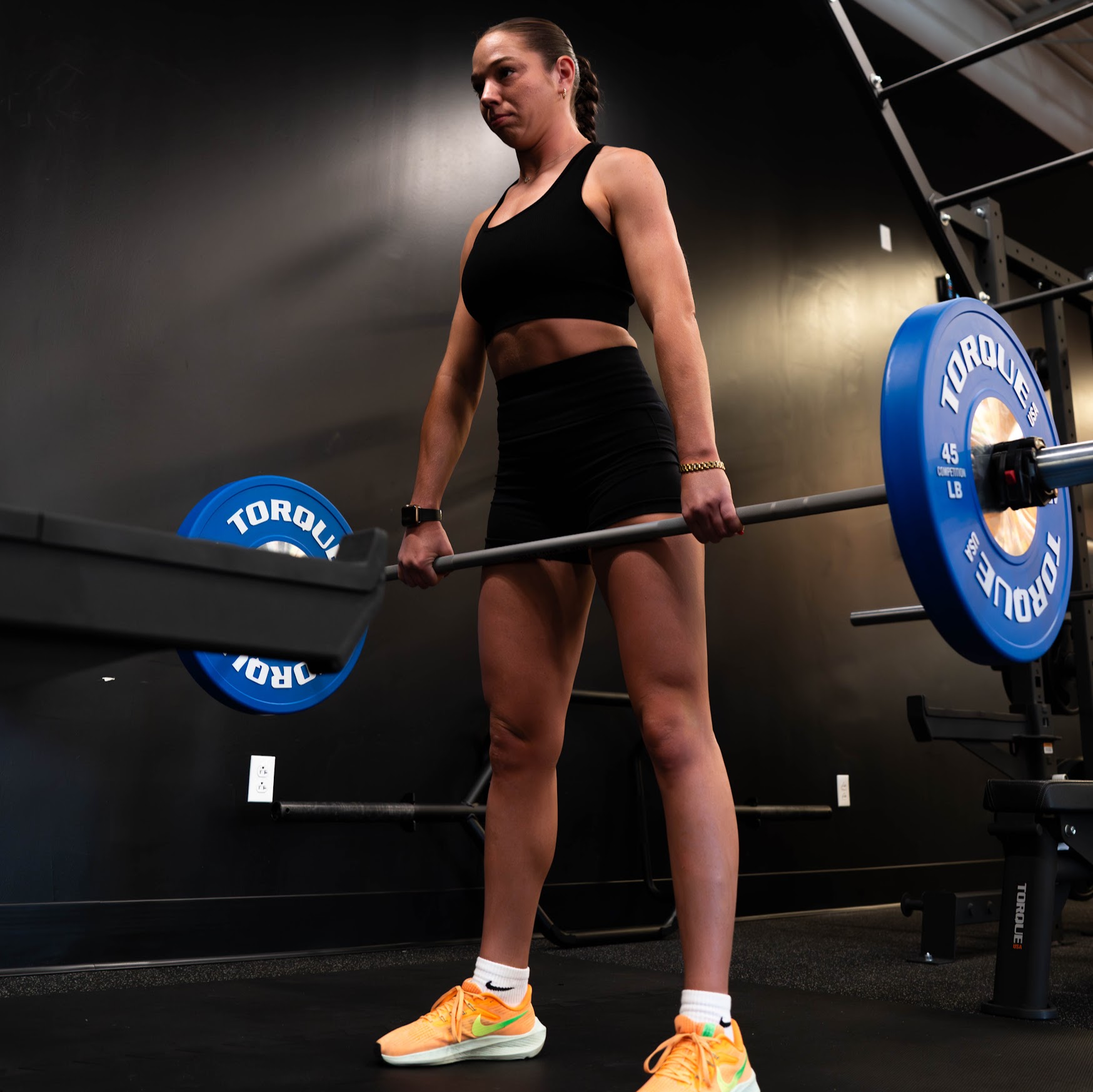
A client comes to me after rotator cuff surgery. The surgical shoulder is in a sling. What is trainable? The opposite shoulder. Both legs. The posterior chain. The core. The grip. The respiratory system. A client who is three weeks post-op and doing single-leg Romanian deadlifts, trap bar deadlifts with one arm, and core anti-rotation work is building the systemic strength base that will make the shoulder rehabilitation more effective when it comes — not less.
A client with a medial meniscus partial tear who has been told to rest and do theraband work. What is happening while they rest? The quad is atrophying. The glute is inhibiting. The hip abductors are weakening. The movement pattern that created the asymmetric loading that stressed the meniscus in the first place is becoming more entrenched, not less. Rest does not fix a movement problem. It preserves it.
The integration principle is straightforward: identify what is injured, protect it appropriately, and train everything else as hard as possible. Then, as the injured structure heals and can tolerate load, introduce progressive loading at that site — starting with isometric holds at end-range, progressing through eccentrics, then into full compound loading with expert supervision.
This is not novel. This is what every elite sports medicine department does for professional athletes. A professional football player with a hamstring strain does not stop training. His coach modifies the stimulus to protect the tissue while maintaining the systemic training effect. He returns to play in two weeks. The recreational runner with the same injury goes to a clinic, does theraband curls for six weeks, and comes back deconditioned and no stronger. The difference is not the injury. It is the model.
I want to be direct about something, because this is where the fitness industry tends to oversell itself.
The integration of rehabilitation and strength training requires a specific competency set that most personal trainers do not have. It requires a thorough understanding of anatomy, tissue healing timelines, neuromuscular inhibition patterns, and the ability to distinguish pain that is productive from pain that is a warning signal. It requires knowledge of how to modify a compound lift to load a system without stressing a healing structure. It requires the judgment to know when a client needs to be referred back to a physician or therapist, and the professional network to make that referral.
What I bring to this work is a graduate degree in Sports Science and Biomechanics from the University of Pittsburgh, years of applied sports medicine experience in return-to-play environments with competitive athletes, and fifteen years of working with post-rehab clients who were told their only options were surgery, injections, or learning to live with it.
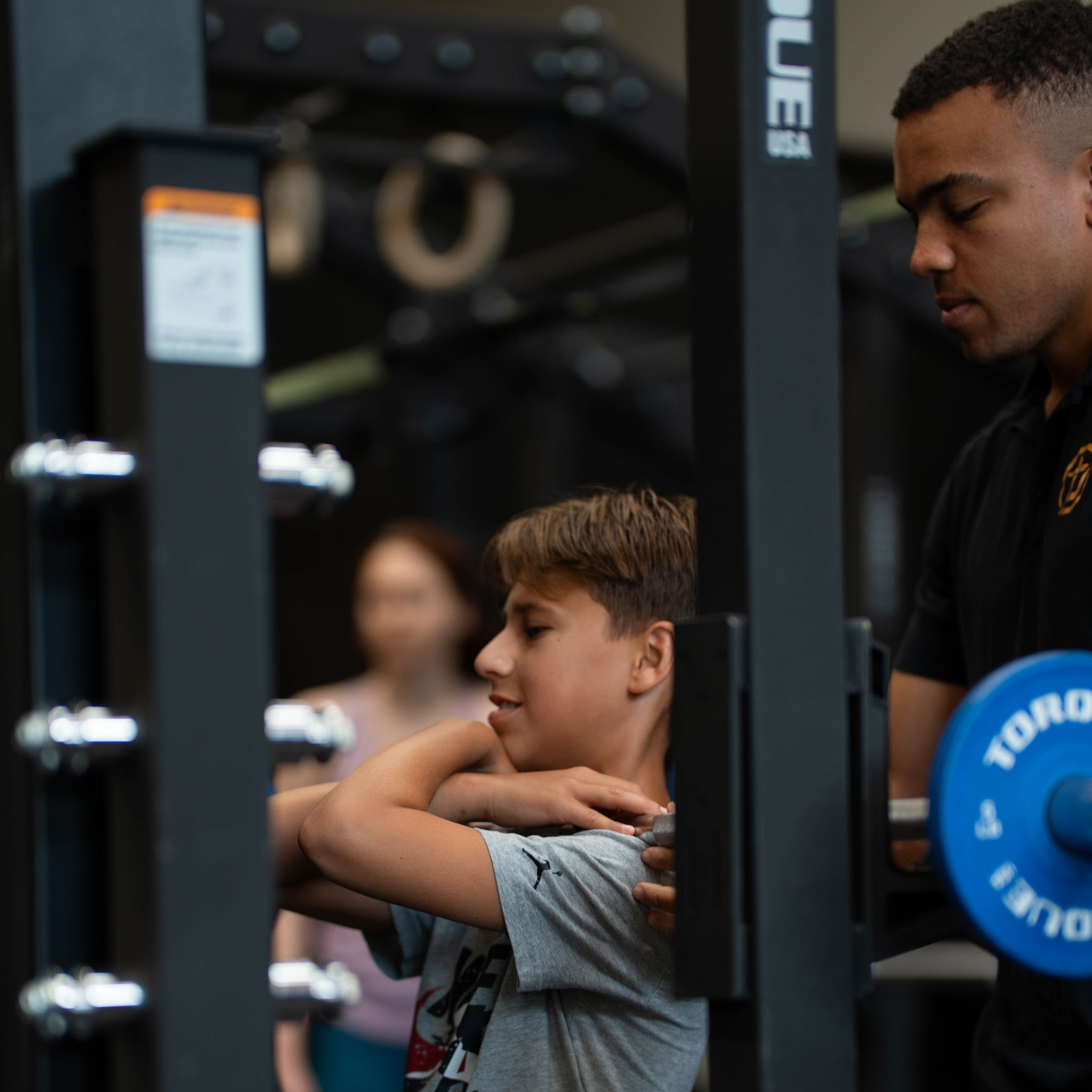
I am not practicing physical therapy. I am doing what elite strength coaches have always done: training the whole athlete, intelligently, in a way that the clinical environment is not built or staffed to do.
A 52-year-old male comes to Essential Strength six weeks after completing a standard PT protocol for a lumbar disc herniation at L4-L5. He was discharged with a home exercise program consisting of bird dogs, cat-cows, and nerve flossing. His pain has gone from an eight to a three. He cannot bend forward past his knees without pain. He has not deadlifted in eight months.
Assessment findings: bilateral hip flexor shortening with anterior pelvic tilt. Right glute medius inhibition causing contralateral hip drop on single-leg stance. Thoracic kyphosis limiting lumbar extension. Inadequate hip hinge pattern — he flexes the lumbar spine to initiate a forward bend rather than loading the posterior chain. His physical therapy addressed none of these.
Hip flexor lengthening under load. Glute activation supine and prone. Breathing mechanics to restore intra-abdominal pressure. Half-kneeling hip flexor stretch with overhead reach. Deadbug variations. Pallof press isometric holds.
Hip hinge pattern with a dowel rod for proprioceptive feedback. Trap bar deadlift from blocks — bar height adjusted so the lumbar spine remains neutral throughout. Single-leg Romanian deadlift with light load. Cable pull-throughs. Bulgarian split squat introduced for unilateral posterior chain development.
Trap bar deadlift at progressive loads. Conventional deadlift introduced when pattern quality justifies it. Anterior core work progressed to loaded carries. Pain: zero. Range of motion: full. Deadlift at week sixteen: 225 pounds for five reps, pain-free.
No single-joint exercise appears in that protocol after week two. No protocol-driven timeline overrides clinical observation. No arbitrary endpoint. That is what integrated rehabilitation and strength training looks like. It does not look like a clinic. It looks like coaching.
Physical therapy, as it is currently structured and delivered in the United States, is not designed to make you strong. It is designed to reduce your pain enough that you can be discharged within your insurance authorization window. That is the system. It is not an accident or an oversight. It is the model.
For a subset of patients with straightforward acute injuries and no history of chronic dysfunction, this is probably sufficient. Get the inflammation down, restore basic range of motion, go home.
For everyone else — the athlete who wants to return to competition at full capacity, the 55-year-old who wants to stop re-injuring the same shoulder every eighteen months, the post-surgical patient who wants to come back stronger than before — the standard model is not sufficient. It is not even close.
The solution is not to skip physical therapy. For acute injuries requiring medical management and early-stage tissue protection, physical therapy is the right first step. The solution is to understand where that first step ends — and to have a coach who knows how to take every step after it.
That is what we do at Essential Strength. We pick up where the clinic leaves off, and we take you somewhere the clinic was never designed to go.
Samuel Pitcairn is the founder of Essential Strength in East Liberty and the Iron 24 Pittsburgh location in Bethel Park. He holds a graduate degree in Sports Science and Biomechanics from the University of Pittsburgh and has applied return-to-play methodology with competitive athletes at every level of sport.
After you submit this form we will be in contact within 24 hrs to set up an appointment to come into our East Liberty location for a performance assessment.