Your Doctor Prescribed a Pill for Your Bones. Here's Why That's Not Enough.
Rehab and Recovery
%20(2).png)
Your DEXA scan comes back. The doctor looks at the numbers, looks at you, and slides a prescription across the desk.
"Take this. It'll help your bones."
And you leave thinking the problem is handled.
It isn't.
What follows is exactly what is happening inside your skeleton, why the pharmaceutical approach to bone health is incomplete at best and harmful at worst, and what the research — and one of the most decorated bone physiologists in the world — says is the only intervention that actually builds bone.
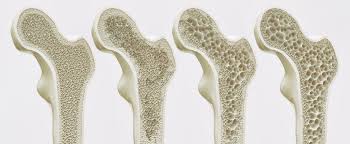
Bone is not static. It is living tissue, constantly undergoing a process called remodeling — old bone is broken down by cells called osteoclasts, and new bone is laid down by cells called osteoblasts. In a healthy adult, these two processes balance each other.
After menopause, or in cases of prolonged low energy availability, sedentary behavior, or chronic stress, this balance tips. Resorption outpaces formation. The scaffold weakens.
The clinical labels for this are:
According to the National Osteoporosis Foundation, roughly 10 million Americans have osteoporosis, and another 44 million have low bone density. The majority are women over 50.
The medical system's default response? Medication.
The two most commonly prescribed classes of drugs for low bone density are bisphosphonates (Fosamax, Boniva, Reclast) and, more recently, monoclonal antibodies like denosumab (Prolia).
Here is what they actually do — and what they don't tell you in the four-minute appointment.
Bisphosphonates work by suppressing osteoclast activity. They slow bone resorption.
The pitch is compelling: if resorption is outpacing formation, stop resorption. Simple.
The problem is that osteoclasts don't just destroy bone — they are part of the remodeling cycle that allows bone to adapt. When you suppress that process indiscriminately, you end up with older, more mineralized bone that looks denser on a DEXA scan but is actually more brittle.
This is not speculation. The medical literature has documented a phenomenon called atypical femoral fractures — spontaneous, low-trauma breaks of the femur shaft — occurring in long-term bisphosphonate users. The bone becomes too mineralized to flex under load. It snaps.
The FDA has required updated labeling on these medications since 2010 acknowledging this risk.
Additionally, long-term use has been associated with osteonecrosis of the jaw (ONJ), a rare but severe condition in which jawbone tissue begins to die. The risk is higher with intravenous formulations, but it exists across the category.
Bisphosphonates are not evil. They have a legitimate role, particularly for patients at very high fracture risk in the short term. But they are being prescribed as a long-term solution when the research supporting their use beyond three to five years is, at best, equivocal.
Many clinicians now recommend a drug holiday after five years precisely because the long-term risk-benefit calculation is unclear.
Denosumab works differently — it is an antibody that blocks a protein called RANKL, which is essential for osteoclast development. Fewer osteoclasts means less resorption.
The clinical trials show meaningful improvements in bone mineral density. The drug is effective.
Here is what the fine print says: if you stop taking it, you will likely lose bone faster than before, and potentially more bone than you gained.
The rebound effect from discontinuing denosumab is well-documented and significant. Multiple case series have reported vertebral compression fractures occurring within months of stopping the drug. The mechanism is the same — you suppressed osteoclasts so aggressively that when the drug clears, they surge back. The transition off this medication requires a carefully managed handoff to bisphosphonate therapy to blunt the rebound.
You cannot simply stop taking it. You are, in many respects, committing to a lifelong pharmaceutical dependency when you start.
I studied Exercise Physiology at the Ohio University. My professor was Dr. Anne Loucks — a name that may not be familiar to you unless you work in sports medicine or physiology research, in which case it should be on the wall.
Dr. Loucks was the world's foremost authority on the Female Athlete Triad: the relationship between low energy availability, menstrual disruption, and bone loss. She conducted decades of landmark research on how the skeleton responds to energy status, hormonal environment, and mechanical stress. She worked with NASA to study bone loss in microgravity environments, because the physiology of astronauts losing bone in space is directly analogous to the physiology of sedentary, estrogen-deficient women on Earth.
She was not a pharmaceutical optimist. She understood, at a mechanistic level, what makes bone grow.
She was unambiguous: there is no pill that builds bone the way load does. Medications can slow the rate of loss. Some can modestly improve density on a scan. But the only stimulus that activates osteoblasts to lay down new, structurally sound bone matrix is mechanical loading — specifically, the compression and bending forces that occur under significant resistance.
Bone contains collagen fibers embedded in a mineral lattice (primarily hydroxyapatite). When this structure is compressed or bent, it generates small electrical potentials. This is the piezoelectric effect, and it is the key mechanism by which bone senses mechanical load.
Those electrical signals activate osteoblasts. They respond by depositing new bone matrix in the direction of the applied load. This is why the dominant arm of a tennis player has measurably denser bone. This is why weightlifters have measurably higher bone mineral density at the spine and hip. This is why bedridden patients lose bone catastrophically.
Walking does not produce a sufficient stimulus. The compressive forces generated by a stroll are not meaningfully different from standing. Yoga, swimming, and cycling do not load bone in the way that produces adaptation. Water buoyancy eliminates load almost entirely.
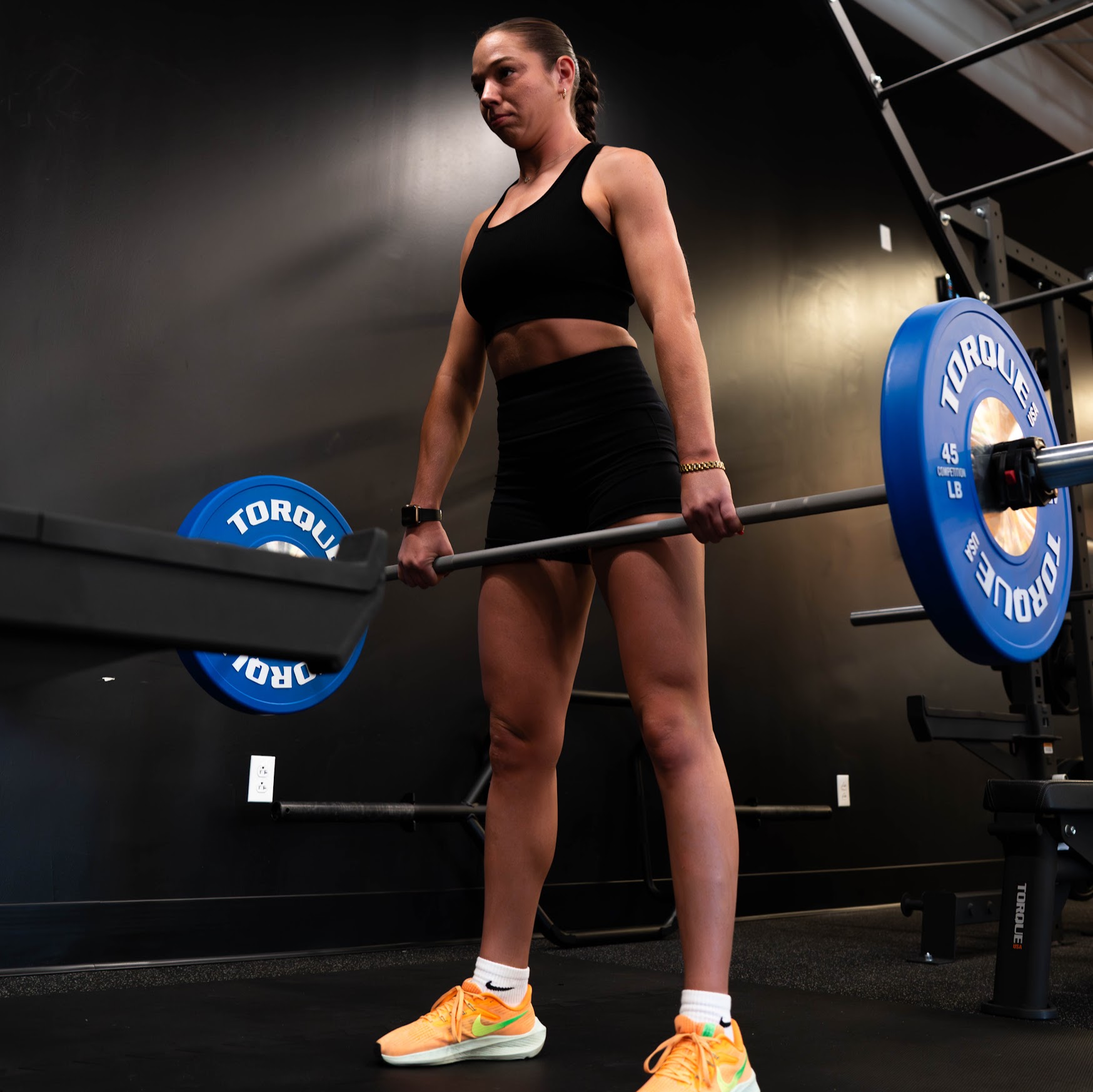
The research that settled this debate is the LIFTMOR trial (Watson et al., 2017), published in the Journal of Bone and Mineral Research. Postmenopausal women with low to very low bone mass were randomly assigned to either a high-intensity resistance training program (heavy deadlifts, squats, and overhead pressing) or a low-load, low-intensity exercise program.
Results after eight months:
No pharmaceutical was involved. Just load.
Here is where most programs fail the population that needs this most.
"Heavy" is relative. For a deconditioned 62-year-old woman who hasn't lifted in a decade, heavy is not the same as heavy for a competitive powerlifter. What matters is that the load is sufficient to challenge the skeleton and musculature — enough to create a mechanical stimulus the body interprets as a reason to adapt.
In practice, for bone density purposes, this typically means working in the 4-to-8 repetition range with loads heavy enough that the last rep requires genuine effort. The exercises must involve the axial skeleton — the spine and hips — which means squatting and hinging patterns, not leg extensions or bicep curls.
Here is a sample framework we use for clients in our Active Aging and Longevity program at Essential Strength:
Perform twice per week. Rest periods are non-negotiable — full recovery between sets is essential for maintaining load and quality.
A1. Trap Bar Deadlift
A2. Back Squat
B1. Single-Leg Romanian Deadlift (Dumbbell)
B2. Seated Dumbbell Overhead Press
The pharmaceutical approach to bone health is a rearguard action — it slows the retreat while doing almost nothing to advance the front line. The medications exist because doctors have a prescription pad and patients want a solution that doesn't require them to change their lifestyle.
But bone does not care about your prescription. Bone responds to force.
The research is not ambiguous. The mechanism is not controversial. The only debate is whether the medical establishment is willing to prescribe the intervention that actually works: progressive, supervised, heavy resistance training — done consistently, indefinitely, with appropriate programming for the individual.
At Essential Strength, this is what we do. We work with adults who have been told their bones are thinning, their frailty is inevitable, or their best option is a pill. We run movement assessments, we build individualized loading programs, and we produce measurable results.
If you are on a bone medication and want to understand what an actual long-term strategy looks like — one that complements your medical care or potentially allows you to have a conversation with your physician about reducing pharmaceutical dependency — book a consultation. We will build you something your skeleton can feel.
Samuel Pitcairn is the founder of Essential Strength in Pittsburgh. He holds a graduate degree in Sports Science and Biomechanics from the University of Pittsburgh and has published peer-reviewed research through Pitt's Biodynamics Lab.
Our clinical strength programs are built for exactly this — safe, progressive bone-loading under Master's-level coaching. Book a free 30-minute consultation — we cap our roster, so requests are reviewed in order.
Book Your Free Consultation →
Explore Active Aging & Longevity Training
After you submit this form we will be in contact within 24 hrs to set up an appointment to come into our East Liberty location for a performance assessment.