How to Prep Your Legs for the Pittsburgh Marathon: A Strength Guide
Training
%20(2).png)

If you are training for the Pittsburgh Marathon, you already know the truth: this is not a flat, predictable PR course. Between the steady incline up to Oakland, the grind of the Birmingham Bridge, and the undulating stretches through the East End, the Pittsburgh course demands more than just cardiovascular endurance. It demands structural resilience.
Many runners spend months meticulously tracking their weekly mileage, but completely ignore the structural engine required to power through those miles safely. At Essential Strength, we see the results of this imbalance every spring: runners sidelined by IT band syndrome, runner’s knee, and plantar fasciitis just weeks before race day.
If you want to survive the hills of Pittsburgh and cross the finish line downtown feeling strong, you need to lift. Here is the clinical, sports-science approach to prepping your legs for the marathon.
Running is essentially thousands of repetitive, single-leg plyometric bounds. Every time your foot strikes the pavement, your body absorbs up to three times your body weight in ground reaction force.
If your joints, tendons, and ligaments aren't fortified through targeted strength training, that force slowly breaks down your tissues. Cardiovascular endurance dictates how long your heart and lungs can work; strength training dictates how much load your muscles and joints can tolerate before they fail.
Our city's unique topography requires a specific approach to strength programming.
Generic group fitness classes won't cut it. To build a resilient runner’s body, your programming must be intentional and biomechanically sound.
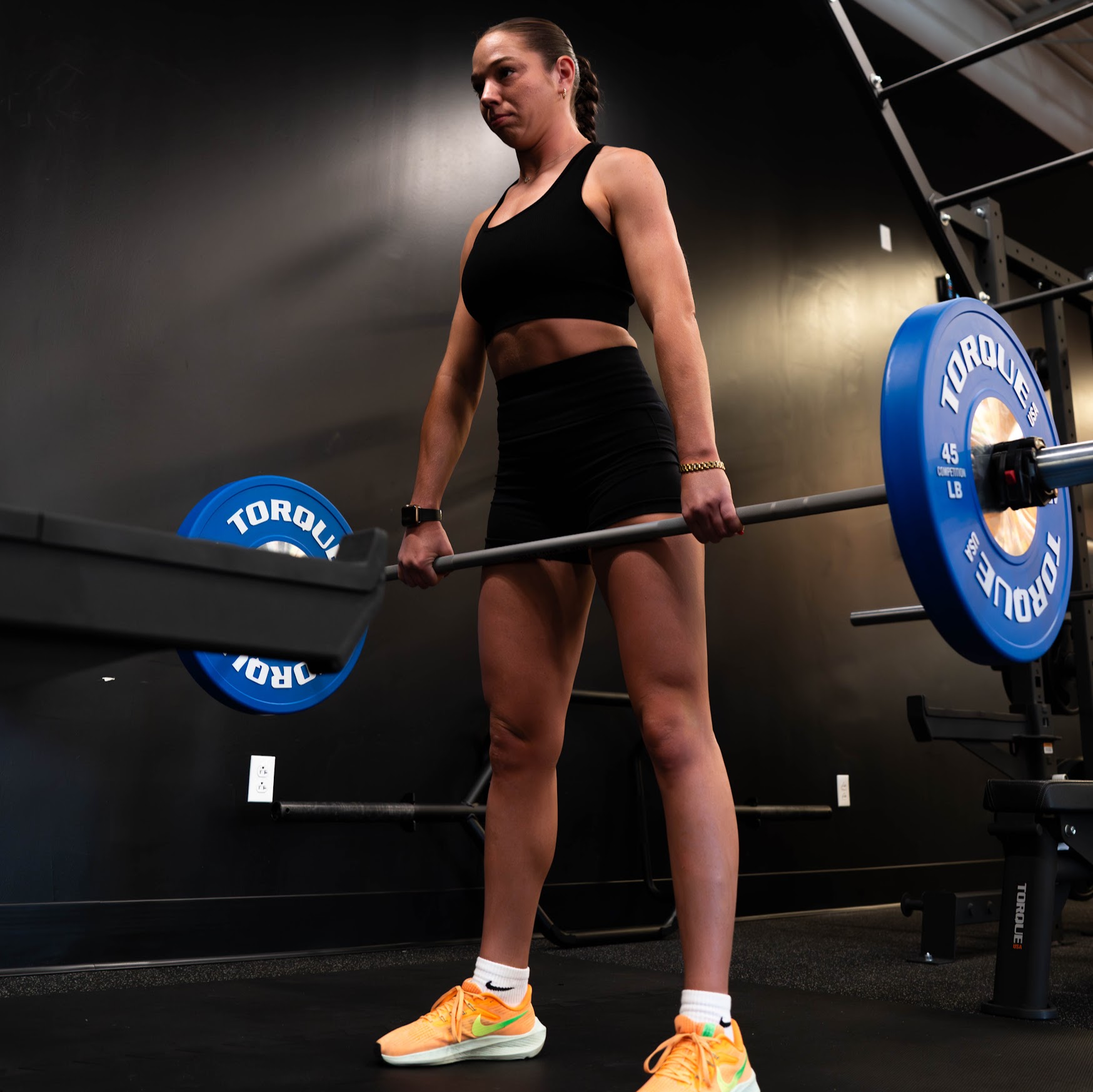
You never run on two legs at the same time, so why only train bilaterally? Single-leg movements expose and correct the subtle imbalances that lead to overuse injuries.
Many runners are incredibly quad-dominant. To generate speed and protect your knees, you need to shift the workload to the massive muscles on the back of your body.
Your arms and legs are levers attached to your torso. If your core is weak, energy "leaks" out of your system with every stride, forcing you to work harder to maintain your pace.
A cookie-cutter marathon PDF you found online cannot assess your unique movement patterns. Whether you are a seasoned competitor chasing a Boston Qualifying time or a "Rebuilder" trying to complete your first half-marathon without knee pain, you need a plan tailored to your exact physiology.
At Essential Strength, our Master's level coaches specialize in bridging the gap between clinical biomechanics and elite sports performance. In our semi-private training sessions at our East Liberty locations, we engineer the exact programming you need to build speed, eliminate pain, and dominate your race.
Ready to build a stronger stride? Before you log another 15-mile weekend, book a 60-minute diagnostic physical assessment with our team. We will analyze your movement patterns, identify your weak points, and build the exact roadmap you need for race day.
After you submit this form we will be in contact within 24 hrs to set up an appointment to come into our East Liberty location for a performance assessment.